Solar Panel Maintenance UK: What You Actually Need to Do
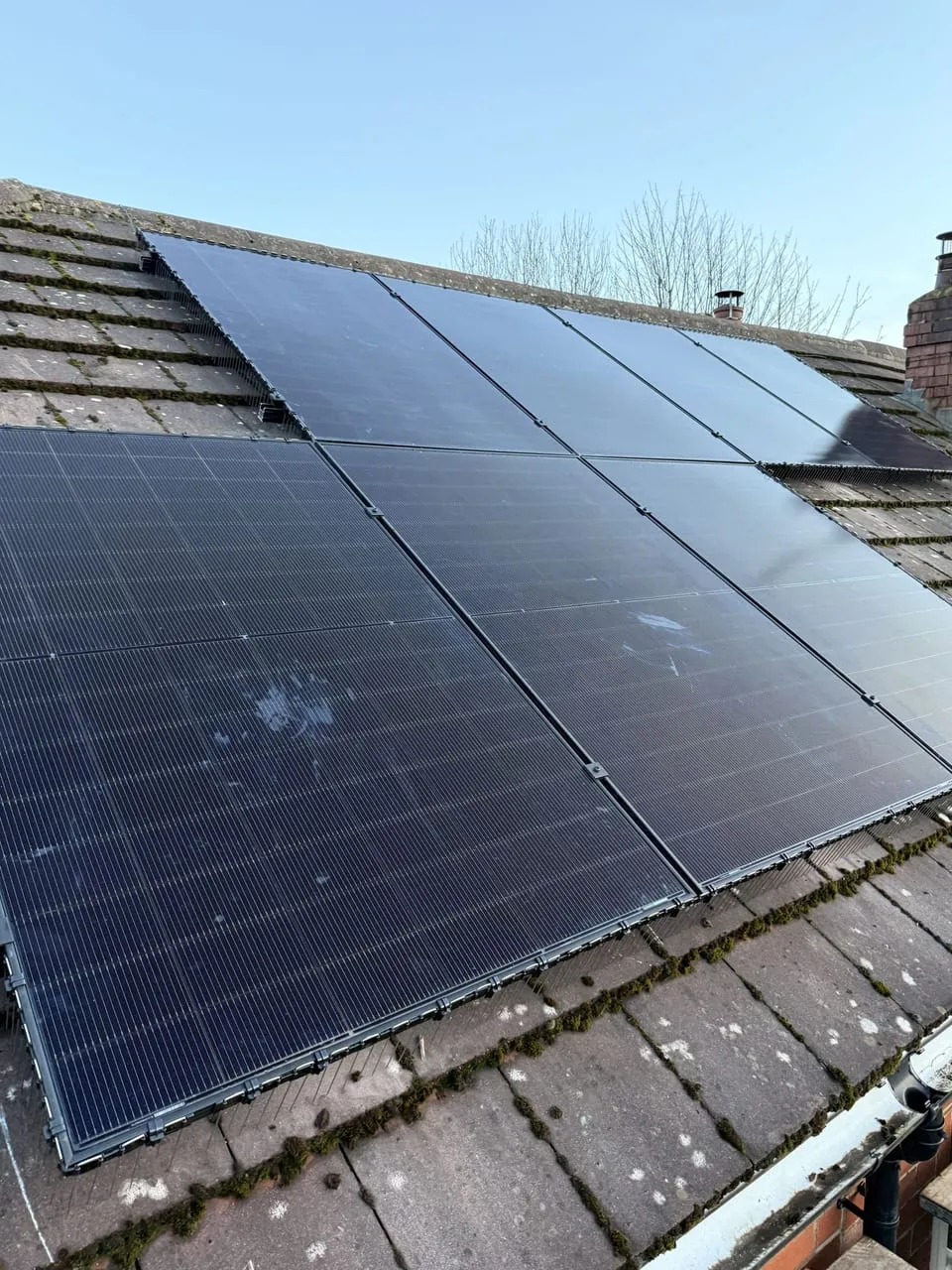
The honest answer
Very little. There are no moving parts, British rain does the cleaning, and the one planned cost is the inverter — replaced once at 10–15 years for £500–£1,000.
"Low maintenance" does not mean "no maintenance" — but it is close. Here is exactly what to do, and what to safely ignore.
Solar panel maintenance and servicing costs (2026)
| Item | Typical UK price |
|---|---|
| Annual professional service / health check | £100–£250 |
| Panel cleaning (10–12 panel array) | £150–£250 |
| Inverter replacement (unit only) | £500–£1,000 |
| Inverter replacement (supplied and fitted) | £800–£1,500 |
| Bird proofing (mesh, typical array) | £300–£600 |
| Monitoring (app-based) | £0 |
| Annual maintenance contract | £100–£500 |
| Isolator / connector fault repair | £100–£300 |
What a solar panel service actually includes
A proper annual service covers: visual inspection of panels, fixings and cabling; inverter health check and error-log review; generation output verified against expected yield; DC isolator, connector and earth-bond checks; and a written report. If a so-called service is just a wash and a glance, you are paying cleaning rates for maintenance money.
Cleaning: let the rain handle it
In most of the UK, panels need no manual cleaning — rain removes dust, pollen and bird droppings effectively. Studies consistently show professional cleaning improves output by only 1–3% in a temperate climate, rarely justifying the £100–£200 cost. Exceptions: shallow-angle panels (below 15°) that don't self-clean, panels under trees with heavy droppings, or sites near construction and motorways. In those cases use a soft brush and clean water only — never abrasives, pressure washers or chemicals.
Inverter replacement: the one planned cost
Panels last 25–30+ years with minimal degradation (~0.4%/year for modern N-type). Inverters don't — string inverters typically last 10–15 years, and a replacement costs £500–£1,000. Fitting a hybrid inverter from the start (£1,000–£2,000) lets you add battery storage later without replacing it, often saving £500–£1,000 versus retrofitting.
Monitoring: catch problems early
Modern systems include monitoring apps (GivEnergy, Tesla, SolarEdge, Enphase). Check yours weekly — a sudden output drop usually signals a panel fault, inverter issue or new shading. Most problems are caught within days with active monitoring versus months when relying on bills.
Insurance and warranties
Solar panels should be covered by your home insurance — notify your insurer at install. Most policies cover them as part of the building at no extra premium. The same low-maintenance reality applies at scale on commercial systems, where monitoring and planned inverter swaps are simply scheduled. If you would rather hand it over, solar maintenance specialists handle servicing, cleaning and inverter replacement on a scheduled contract.
The maintenance checklist
| Task | Frequency | Typical cost |
|---|---|---|
| Cleaning | Rarely — rain does it | £0 (£100–£200 if needed) |
| Monitoring check | Weekly (via app) | £0 |
| Visual / output review | Annually | £0 |
| Inverter replacement | Once at 10–15 years | £500–£1,000 |
| Insurance notification | Once, at install | £0 (usually no premium rise) |
Frequently asked questions
Do solar panels need cleaning in the UK?
Usually not. UK rain removes dust, pollen and droppings effectively, and professional cleaning improves output by only 1–3% — rarely justifying the £100–£200 cost. Exceptions: shallow-angle panels (below 15°), heavy shade with bird droppings, or sites near construction/motorways.
How often do solar inverters need replacing?
String inverters typically last 10–15 years and cost £500–£1,000 to replace — the one planned maintenance cost of a solar system. Microinverters last 20–25 years. Many homeowners fit a hybrid inverter from the start (£1,000–£2,000) so a battery can be added later without replacing it.
How do I know if my solar panels are working?
Use the monitoring app (GivEnergy, Tesla, SolarEdge, Enphase) and check it weekly. A sudden output drop usually means a panel fault, inverter issue or new shading. Active monitoring catches problems in days rather than the months it takes to notice on a bill.
Are solar panels covered by home insurance?
Yes — most home insurance policies cover roof-mounted solar as part of the building structure at no extra premium. Notify your insurer when you install so it is recorded.