Best Solar Inverters UK 2026: Hybrid-First Rankings
If you’re speccing a new solar system in 2026, the panels are almost the boring part of the decision. Panel technology has more or less converged — most reputable brands now sell N-type modules with near-identical warranties and degradation curves. The component that actually shapes what your system can do for the next 15 years is the inverter, and specifically whether it’s a hybrid unit ready for a battery, or a plain string inverter that will need replacing the moment you want to add one.
This guide ranks the inverter brands UK installers are actually specifying in 2026 — GivEnergy, Fox ESS, Solis, SolarEdge and Sungrow — and makes the case for why “hybrid-first” should be the default answer for almost every homeowner, even if you can’t afford a battery on day one.
Why the inverter matters more than people think
A solar inverter does one job — convert the DC electricity your panels generate into the AC electricity your home and the grid use — but it’s also the brain of the system. It decides how power flows between panels, battery, home and grid; it’s the component most likely to fail before the panels do (typically 10–15 years for a string inverter, versus 25–30+ years of usable panel life); and it’s the single biggest factor in whether you can bolt on a battery later without a costly re-wire.
There are three broad categories on the market:
- String inverters — the traditional, cheapest option. AC-coupled batteries can be retrofitted, but usually at a premium and with some efficiency loss.
- Hybrid inverters — built with a DC battery connection from the outset. You can add a battery now or in five years without swapping the inverter.
- Optimiser-based systems (module-level power electronics) — each panel gets its own optimiser, maximising output on roofs with shading or multiple orientations, feeding into a central inverter.
For a deeper breakdown of how UK solar actually performs once it’s on your roof, our own do solar panels work in the UK guide is worth reading alongside this one, and if you want the maths on the panels themselves, best solar panels UK covers the module side of the equation.
The hybrid-first case, in plain terms
Here’s the logic installers give for defaulting to hybrid, even for customers who say they don’t want a battery yet:
- Battery prices are still falling. A home battery today costs roughly £4,000–£8,000 installed (around £400–£700 per kWh), with a Tesla Powerwall 3 (13.5 kWh) landing around £8,500–£10,500. Retrofitting a hybrid-ready system later is far cheaper than re-doing the inverter.
- The 0% VAT window matters right now. Residential solar and battery storage carry 0% VAT in Great Britain until 31 March 2027, after which it’s scheduled to return to 5%. If you’re going to add a battery within the next couple of years, doing it while a hybrid inverter is already on the wall — and while VAT relief still applies — saves both installation cost and tax.
- Export rates reward flexibility. Smart Export Guarantee (SEG) rates vary by supplier — typically somewhere in the 12–20p/kWh range at the top end — and a hybrid inverter with a battery lets you choose when to export or hold charge for the evening peak, rather than being a passive exporter at whatever rate is on offer that quarter.
- MCS-certified installs are the only way to get SEG payments at all, so whichever inverter you choose, confirm the installer and the kit combination is on an MCS-certified job sheet before signing anything.
With over 257,000 MCS-certified installs completed in the UK in 2025 (up 32% year on year) and around 21.6 GW of solar now deployed nationally, hybrid has become the mainstream default rather than a premium add-on — most installers are now quoting it as standard.
The rankings
Tier 1: GivEnergy and Fox ESS
GivEnergy has become something of a UK installer favourite, largely because it’s a British company with UK-based support and stock, which matters when something needs warranty attention. Its hybrid range (the All in One and Gen 2/3 hybrid inverters) integrates tightly with its own battery packs and the Gen 2 EV charger, giving installers a single-brand ecosystem that’s easy to commission and easy to diagnose faults on. The app is genuinely usable, which is not something you can say about every inverter brand’s monitoring platform. Warranty terms are competitive, typically 10 years as standard with extension options.
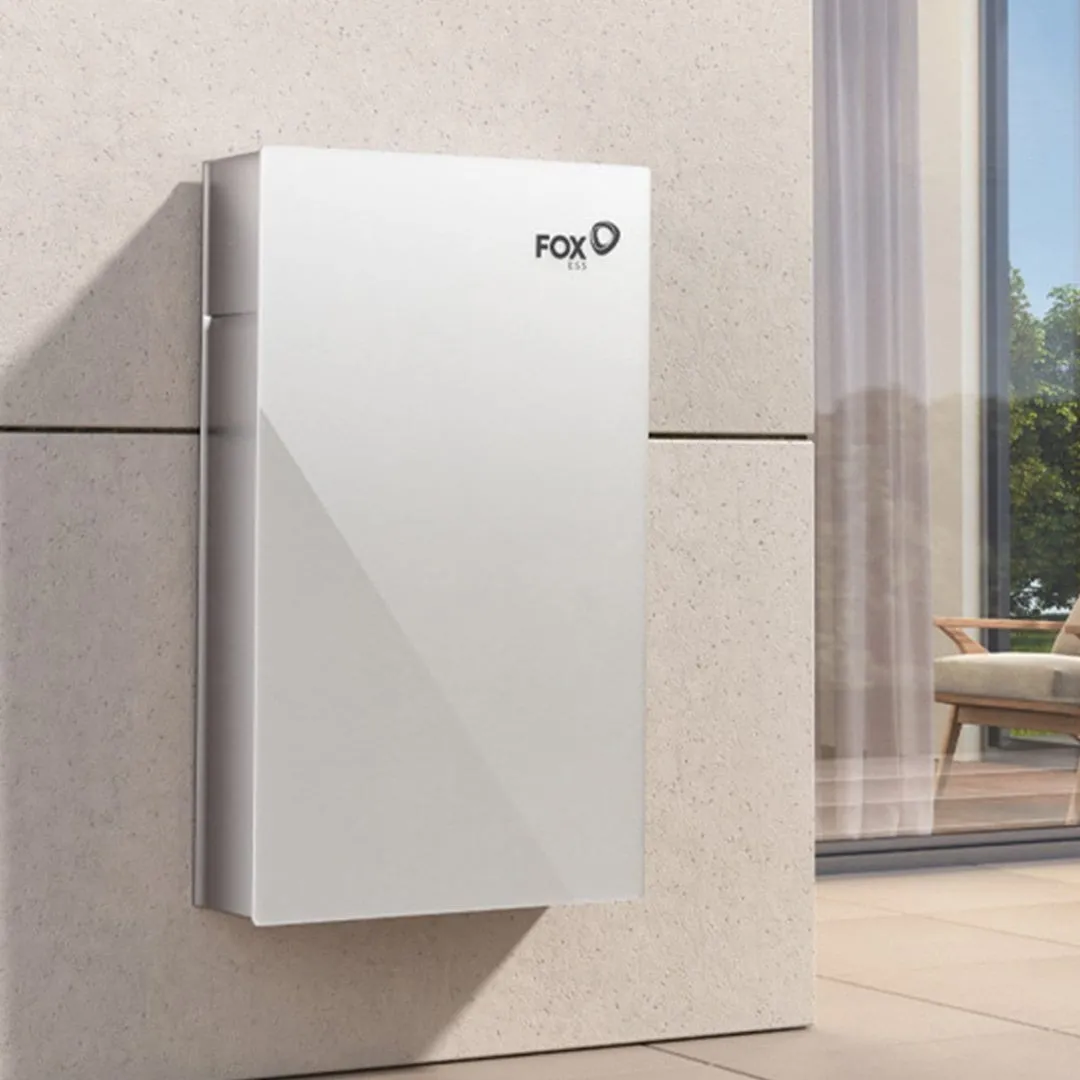
Fox ESS sits right alongside it. Fox’s hybrid inverters (the H3 and EP series) have a strong reputation for reliability and are widely stocked by UK wholesalers, meaning parts and replacement units are rarely a supply-chain headache. Fox has also pushed hard on three-phase hybrid options, which matters increasingly for larger homes and small commercial installs where three-phase supply is standard.
Both brands are frequently specified by installers across our network. YEERS in Yorkshire and Ecoaim in Central Scotland both work with hybrid-first specifications as standard on residential jobs, precisely because so many customers ask about battery storage within the first year or two of owning solar.
Tier 2: Solis and Sungrow
Solis is one of the highest-volume inverter manufacturers globally, and its hybrid range (the S6 series) has matured considerably over the past couple of years. It’s a sound value pick — slightly cheaper than GivEnergy or Fox in like-for-like specification, with a solid (if less UK-centric) support network. Where it loses a little ground is app polish and the depth of local UK stock versus the Tier 1 brands, though this gap has narrowed.
Sungrow brings serious manufacturing scale and genuinely strong efficiency figures — its hybrid inverters are competent, well-engineered units. It’s a common choice on larger domestic and small commercial jobs, and installers rate its robustness. The trade-off is a slightly steeper learning curve for homeowners trying to self-monitor via the app compared with GivEnergy’s more consumer-friendly interface.
Tier 3 (with an asterisk): SolarEdge
SolarEdge deserves a category of its own because it isn’t really a hybrid-vs-string comparison — it’s an optimiser-based architecture. Each panel gets a power optimiser, and the central inverter (SolarEdge does offer a hybrid/battery-ready variant) manages the string at the individual-panel level. This makes SolarEdge the strongest choice on roofs with partial shading, multiple roof faces, or awkward layouts, because one shaded panel doesn’t drag down the whole string’s output the way it can on a straightforward string or basic hybrid system. The trade-off is more components on the roof (an optimiser per panel) and a higher total parts count that, in theory, means more that can eventually need replacing. For a straightforward south-facing roof with no shading, it’s arguably over-engineered; for a complex roof, it can be the best-performing option on the market.
What good installers actually check before recommending a brand
A reputable installer isn’t just picking a brand off a price list. They should be:
- Sizing the inverter correctly against your panel array (an undersized inverter clips your peak output; an oversized one wastes money).
- Confirming three-phase vs single-phase supply if you’re on a larger property.
- Checking G98/G99 compliance for grid connection paperwork.
- Making sure the whole system — panels, inverter, battery — is on one MCS certificate, not a patchwork of self-certified components.
- Being upfront about degradation and warranty terms: modern N-type panels degrade around 0.4% a year and are commonly warrantied for 25–30 years, but the string inverter itself will likely need replacing once in that lifespan (budget £500–£1,000), which is exactly why hybrid units with strong track records matter — you want the one replacement you do make to be a like-for-like swap, not a system redesign.
For typical installed costs across system sizes — a 4kW system tends to land around £6,000–£8,000, a 3kW around £5,000, and a 10kW system around £13,000–£17,000 — our sister site thecostofsolar.co.uk breaks down the full national pricing picture, and its dedicated solar battery storage costs page is the right next stop once you’ve settled on a hybrid inverter and want to model battery add-on costs. If you want to sanity-check payback timelines against a real yield assumption (UK systems typically produce 850 kWh per kWp annually, rising to 1,050+ kWh/kWp in the sunniest parts of the south), the solar panel payback period UK page walks through the working.
Regional installers worth talking to
Inverter choice is only half the job — installation quality, commissioning and after-care determine whether any of this actually performs as specified. A handful of installers across our network are worth a mention if you’re in their patch:
- ElectriFusion Solutions in Doncaster and South Yorkshire regularly specifies hybrid-ready systems on domestic jobs, with an eye to future battery retrofits.
- FLD Electrical in Swansea and South Wales covers both the electrical certification side and the panel/battery install, useful if your consumer unit also needs attention.
- Greenlinc Renewables in Lincolnshire is MCS-certified and has direct experience fitting several of the brands above.
- Hazell Electrical in West Kent pairs renewables work with core electrical trade knowledge, which matters when a hybrid inverter install also means consumer unit upgrades.
- Solent Solar in Hampshire and Southcoast Solar Solutions both operate in a part of the country with above-average yield, making the payback case for a hybrid system with battery even stronger.
If you’re weighing up a commercial or larger-scale install rather than a straightforward home roof, the calculus shifts — three-phase supply, higher system sizes and different finance structures come into play. Commercial Solar Panels Installation is a good starting hub for that side of things, and Battery Storage For Business covers the commercial-scale equivalent of the hybrid-first argument made above — pairing generation with storage from day one rather than retrofitting later. If your property is agricultural, Solar Panels For Farms covers the Improving Farm Productivity grant route specific to farm buildings in England, which is worth knowing about if part of your roof is a barn or outbuilding rather than the house itself — that grant is around 25% of eligible cost in England, not the old FETF 40% figure some outdated pages still quote, and rates differ across the UK’s nations.
A word on grants and what actually applies to inverters
It’s worth being precise here, because misinformation about grants is common. There is no universal home solar grant in England in 2026 — support is means-tested through schemes like ECO4 or Warm Homes for low-income, low-EPC-rated households, while Home Energy Scotland offers interest-free loans rather than a grant. The Boiler Upgrade Scheme’s £7,500 is specifically for air source heat pumps and does not apply to solar PV or inverters at all — a surprisingly common point of confusion. What genuinely helps your solar economics right now is the 0% VAT rate on the whole installed system (panels, inverter and battery) until March 2027, which is a much bigger and more universal saving than any grant currently on the table for a typical homeowner.
The bottom line
If you’re comparing quotes and one installer has specified a plain string inverter while another has quoted a hybrid unit from GivEnergy, Fox ESS, Solis or Sungrow for a similar price, ask why. In most cases there’s no good reason not to go hybrid in 2026 — the price premium has narrowed, battery costs keep falling, and the 0% VAT window makes this the cheapest moment in years to build in the option. SolarEdge’s optimiser approach remains the right call specifically for shaded or multi-facet roofs, but for the average UK semi with a clear south or south-west facing roof, a Tier 1 hybrid unit installed by an MCS-certified local installer is the sensible, futureproof default.