If you’ve had a solar quote, you’ve probably spent most of your attention on the panels — how many, what brand, what efficiency. The inverter barely gets a mention, yet it’s arguably the single most important piece of kit on your roof. It’s also the part most likely to need replacing before the panels do, and the one decision that quietly locks you into (or out of) battery storage down the line. This guide explains what an inverter actually does, the four main types you’ll be offered, and why more installers are pushing “hybrid” as the sensible default even if you’re not buying a battery today.
What a solar inverter actually does
Solar panels generate direct current (DC) electricity. Everything in your home — and the National Grid itself — runs on alternating current (AC). The inverter’s job is to convert DC to clean, grid-compliant AC, synchronised precisely with the grid’s frequency and voltage so it can either power your appliances or export safely.
That sounds simple, but a modern inverter is doing several jobs at once:
- Power conversion — DC to AC, with as little energy loss as possible (a good inverter runs at 97–98%+ efficiency).
- Maximum Power Point Tracking (MPPT) — constantly adjusting to pull the most usable power out of your panels as light levels, shading and temperature change through the day.
- Grid synchronisation and safety — it has to match grid frequency exactly and disconnect automatically in a power cut (this is why, without a battery, your panels can’t power your house during a blackout — a genuine surprise for a lot of homeowners).
- Monitoring and reporting — most inverters now come with an app showing generation, consumption and (on hybrid units) battery state in real time.
- On hybrid models, battery and export management — deciding whether to charge the battery, power the house, or export to the grid, second by second.
Get the inverter wrong for your roof or your future plans and you can leave real performance on the table even with excellent panels. It’s also the component with the shortest working life in the system, which matters more than most buyers realise — see below.
The four inverter types, compared
| Type | How it works | Typical cost impact | Best suited to |
|---|---|---|---|
| String inverter | One central inverter converts the combined DC output of a “string” of panels wired in series | Cheapest option; baseline pricing | Simple, unshaded roofs facing one direction |
| Power optimisers + string inverter | Small DC optimiser fitted to each panel, still feeding one central inverter | Adds roughly £30–£80 per panel | Roofs with partial shading, dormers, chimneys, or two roof faces |
| Microinverter | A small inverter fitted to (or under) each individual panel, converting DC to AC at the panel itself | Typically the most expensive per-panel option | Complex roofs, per-panel monitoring priorities, small extensions |
| Hybrid inverter | A string-style inverter with a built-in DC battery connection and export/import management | Often close to standard string pricing now, sometimes a modest premium | Anyone considering a battery now or later |
String inverters: the tried-and-tested default
A string inverter is the traditional set-up: your panels are wired together in one or more “strings” and all that DC power arrives at a single central inverter, usually mounted in the garage or utility room. It’s the cheapest, simplest and most widely fitted option in the UK, and for a straightforward south-facing (or east/west) roof with no shading, it performs perfectly well.
The catch is that a string is only as strong as its weakest panel. If one panel is shaded by a chimney, a TV aerial or overhanging tree for part of the day, the whole string’s output can drop — not just that one panel’s. On a simple, unobstructed roof this is largely academic. On anything more complicated, it’s the reason installers reach for optimisers or micros instead.
Power optimisers: a halfway house
Optimisers sit on the back of each panel and “condition” its DC output before sending it down to a central string inverter. Each panel is tracked and optimised individually, so shading on one doesn’t drag down its neighbours, but you still only have one inverter to worry about (and potentially replace) in the loft or garage. It’s a sensible middle ground for roofs with some complexity — a dormer window, a chimney stack, or panels split across two aspects — without paying full microinverter money.
Microinverters: maximum resilience, maximum cost
Microinverters convert DC to AC right at the panel, so each one operates completely independently. If a tree grows and shades one corner of the roof, or one panel develops a fault, the rest keep working at full output regardless. You also get true panel-level monitoring — genuinely useful for spotting a developing fault early. The trade-off is cost: you’re buying (and eventually replacing) many small inverters instead of one central unit, and if something does fail, it’s up on the roof rather than in the garage.
Hybrid inverters: the one to understand properly
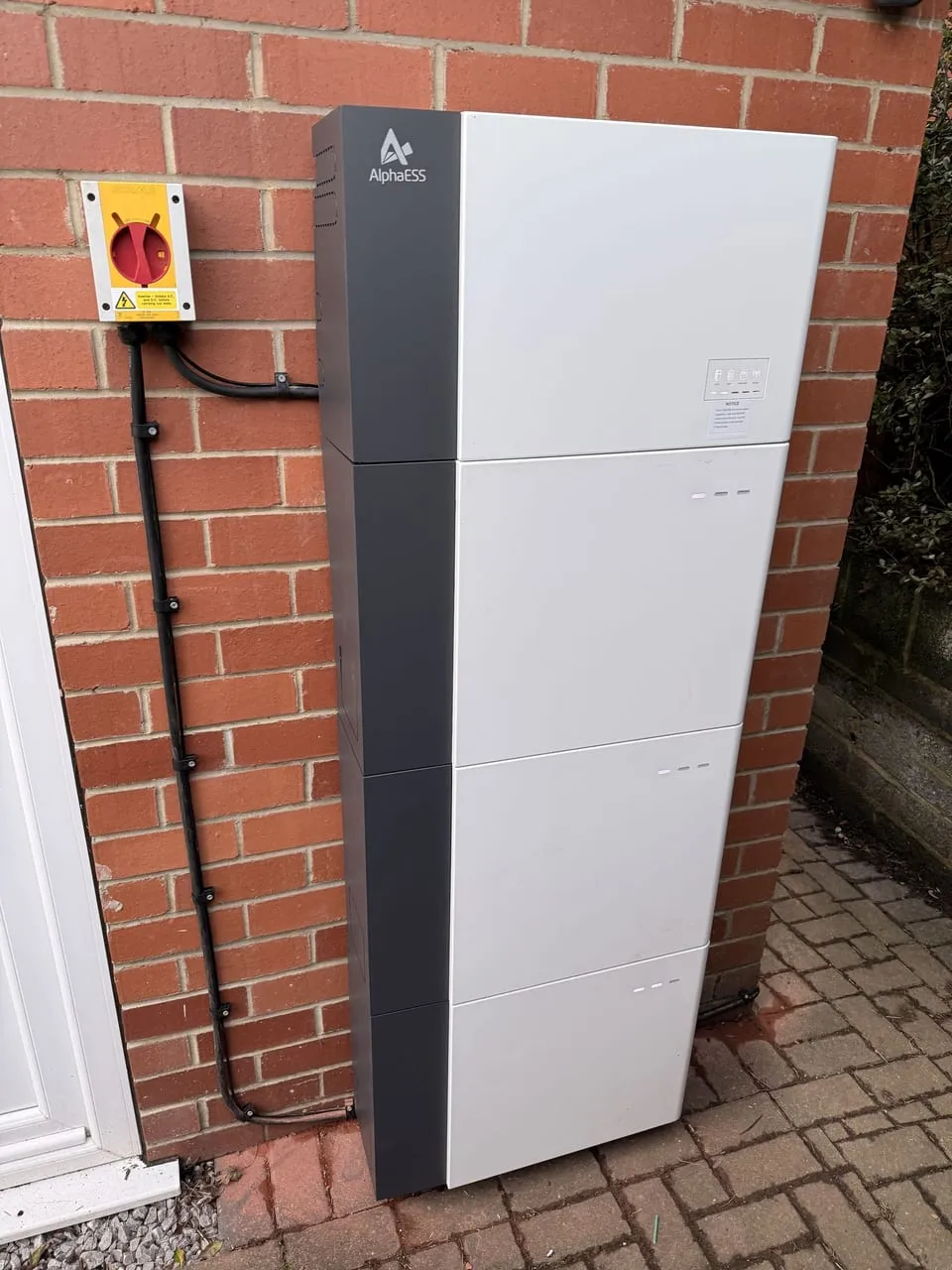
A hybrid inverter looks like a string inverter but has a second DC input built in for a battery, plus the internal logic to manage three energy flows at once: what your panels are generating, what your house is using, and what’s charging or discharging from the battery. Install one now — even without a battery on day one — and adding storage later is usually just a case of connecting a battery to a spare port, rather than fitting a second “AC-coupled” inverter alongside your existing one.
This is the “futureproofing” argument you’ll hear from installers, and it holds up reasonably well: battery prices have been falling, Tesla Powerwall 3 territory (roughly £8,500–£10,500 installed for a 13.5kWh unit) sits alongside a much wider range of 5–10kWh batteries now costing somewhere in the £4,000–£8,000 bracket installed. If there’s a realistic chance you’ll want a battery within the inverter’s working life — even in three or four years, not necessarily this year — a hybrid unit from day one is usually the cheaper, tidier route rather than retrofitting an AC-coupled battery system later.
Where hybrid isn’t the obvious answer: very simple installs where a battery is genuinely never on the cards (some rented or short-term-ownership situations), or DC-optimised roofs where the shading case for optimisers outweighs the battery-readiness case. A good installer should talk through both, not default to whichever they stock.
Brands you’ll actually be quoted
You don’t need to memorise a spec sheet, but it helps to recognise the names that keep appearing in UK quotes: SolarEdge (optimiser-based systems, strong UK installer base), Enphase (the best-known microinverter brand, IQ8 series), GivEnergy and Solis (popular UK/China hybrid brands, competitively priced), Growatt and Huawei (widely fitted hybrid and string options), and Fronius and SMA (German-engineered string and hybrid units, often positioned as the premium tier with correspondingly longer warranties). None of these is universally “best” — the right choice depends on your roof, your installer’s preferred supply chain, and whether battery compatibility matters to you. What’s worth checking regardless of brand is the warranty length (typically 5–12 years standard, extendable on some ranges) and whether your installer can actually get parts and support for that brand in five years’ time — a bigger factor in real-world reliability than the datasheet efficiency number.
Lifespan, efficiency and the bit installers don’t always mention
Panels are now routinely warrantied for 25–30 years, with modern N-type cells degrading at only around 0.4% a year. Inverters don’t keep pace. A typical string or hybrid inverter lasts 10–15 years, meaning most homeowners will replace their inverter at least once during the system’s life. Budget roughly £500–£1,000 for that replacement when it comes due — worth factoring into any 20-year payback calculation rather than treating the system as a one-off cost. It’s a detail our solar payback period guide over on thecostofsolar.co.uk walks through in more depth if you want the full lifetime-cost picture rather than just the up-front install price.
On efficiency, don’t get too hung up on the difference between a 97.5% and 98.2% rated inverter — in practice, correct sizing, good MPPT performance in real UK cloud conditions, and matching the inverter to your roof’s shading profile matter far more to your actual annual generation than a fraction of a percentage point on the spec sheet.
Sizing and the DC/AC ratio
Installers commonly oversize the DC panel array slightly relative to the inverter’s AC rating — say, a 4.5kWp array on a 4kW inverter. This “DC/AC oversizing” isn’t a mistake; it’s deliberate, and it improves performance during the low-light mornings, evenings and overcast days that make up a huge share of UK generation hours, at the cost of clipping a small amount of peak output on the very brightest days. A competent installer will explain their sizing logic rather than just quoting a number — if they can’t, that’s worth asking about directly.
Getting it right on your roof
Inverter choice isn’t something to decide in isolation from panels, battery plans and roof shape — it’s a system-level decision, and it’s exactly the kind of detail a proper site survey should surface rather than a desktop quote. If you’re in South Yorkshire, ElectriFusion Solutions design systems around actual roof shading rather than a generic template; in Central Scotland, Ecoaim fit both optimised and hybrid set-ups depending on the property. Further south, Sola in the Home Counties and FLD Electrical in Swansea both work through the string-vs-hybrid decision as standard on a home visit rather than assuming one answer fits every roof.
If you’re weighing up battery-readiness specifically, it’s worth reading alongside our solar battery storage costs breakdown, and if you haven’t settled on panels yet, our guide to the best solar panels available in the UK covers the panel side of this same system-level decision. For the commercial end of the market — offices, warehouses or larger roofs where inverter sizing and three-phase considerations get more involved — Commercial Solar Panels Installation and Solar Panels For Warehouses both cover the larger-scale equivalent of this same conversation.
The practical takeaway
For a simple, unshaded roof with no battery plans ever, a straightforward string inverter remains perfectly good value. Add any shading complexity and optimisers earn their keep; add a genuine appetite for panel-level monitoring or a very awkward roof and microinverters justify the premium. But for most homeowners weighing up solar in 2026 — with the 0% VAT window running until 31 March 2027 and battery prices continuing to fall — a hybrid inverter is the low-regret choice: it costs little or nothing extra over a standard string unit today, and it means adding a battery next year, or in five years, is a straightforward upgrade rather than a second system bolted on. Ask your installer to size and quote it both ways, and to explain their reasoning rather than just their default stock item.