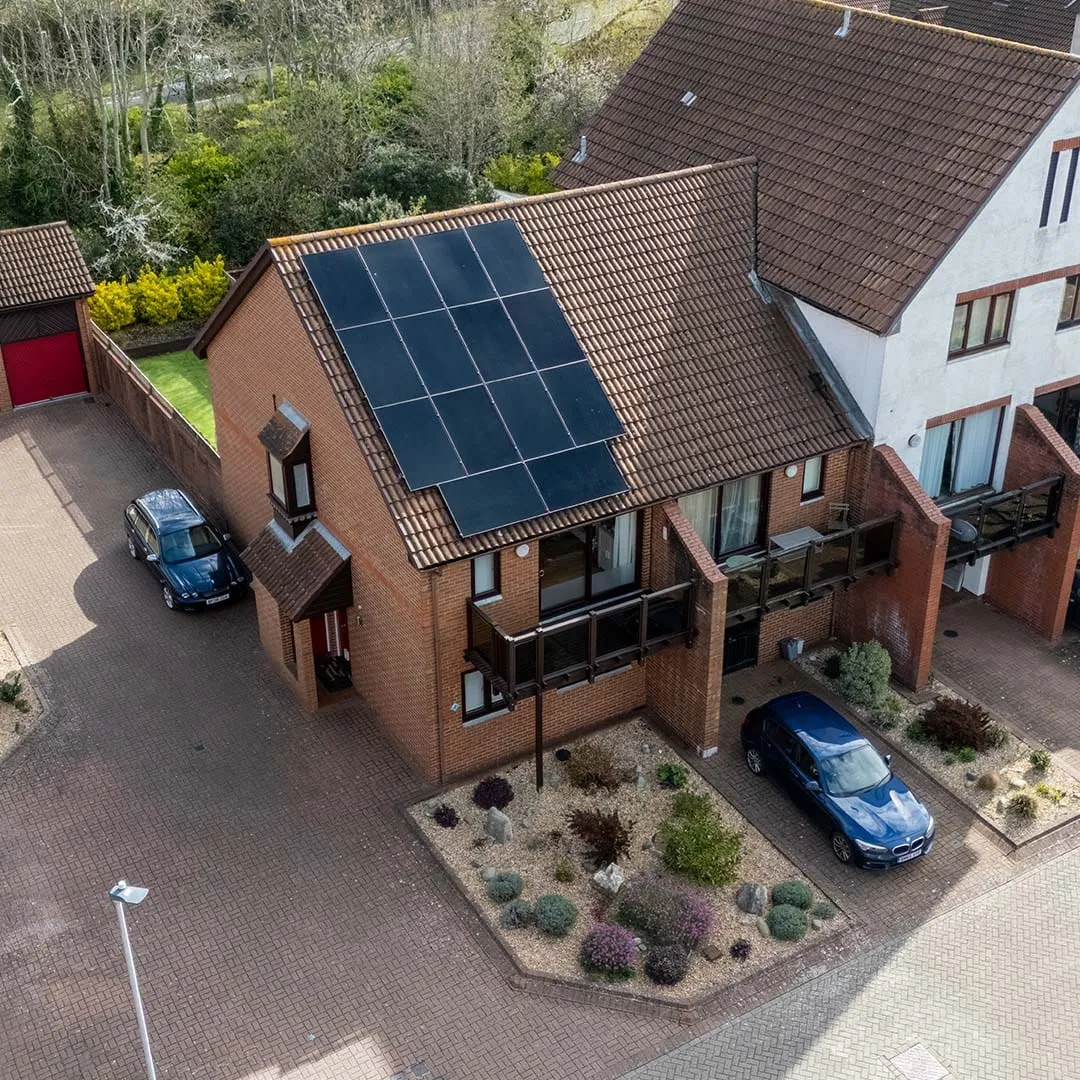
Most UK solar panels installed today won’t need recycling until the 2040s and 2050s — modern panels are built to last 25 to 30 years or more. But with over 257,000 MCS-certified installs in 2025 alone and roughly 21.6 GW of panels now on UK roofs, “what happens when they wear out” is a fair question to ask before you commit £6,000-plus to a new roof full of them. The honest answer is reassuring but not quite as tidy as some installers make it sound: panels are recyclable, the law requires it, but the UK’s dedicated recycling infrastructure is still catching up to the volume that’s coming.
Solar panels are WEEE, by law
In the UK, photovoltaic panels are classed as Waste Electrical and Electronic Equipment (WEEE) under the WEEE Regulations 2013 (as amended), which implement the EU WEEE Directive principles that were retained after Brexit. This matters for two reasons. First, it means panels cannot legally go into general skips or landfill — they must be taken to an approved treatment facility or a WEEE-registered collection point. Second, it puts a “producer responsibility” obligation on manufacturers and importers: companies placing panels on the UK market are required to fund their eventual collection and recycling, usually via a Producer Compliance Scheme such as PV Cycle, which operates the main UK/EU take-back network for end-of-life modules.
In practice, this means when a panel genuinely reaches end of life — through breakage, severe degradation, or a full re-roof — your installer or a licensed waste carrier should be arranging collection through one of these schemes, not just skipping it. If you’re commissioning any decommissioning work, it’s worth asking directly: “which WEEE scheme are you using for the old panels?” A reputable installer will have an answer ready. Reputable regional installers such as FLD Electrical in Swansea and Hazell Electrical in West Kent build this into quotes for panel replacements and roof strip-outs as standard practice, because it’s a compliance requirement, not an optional extra.
What’s actually recyclable in a solar panel
A standard crystalline silicon panel — which is what the vast majority of UK homes and businesses have — breaks down roughly like this by weight:
| Material | Approx. share of panel weight | Recyclability |
|---|---|---|
| Glass (front sheet) | ~70% | Highly recyclable — often into new glass or construction aggregate |
| Aluminium frame | ~10% | Fully recyclable, high scrap value |
| Silicon cells | ~3–5% | Recoverable with specialist processing; can be re-refined |
| Copper wiring/ribbons | ~1% | Fully recyclable, high scrap value |
| Backsheet, EVA encapsulant, junction box (plastics/polymers) | ~10–15% | Hardest fraction — currently mostly downcycled or energy-recovered rather than true recycling |
The glass, aluminium and copper are the easy wins — they’re already recycled at rates well above 90% by specialist processors, using much the same infrastructure as general glass and metal recycling. The harder problem is the laminated sandwich: silicon cells are bonded to glass with an EVA (ethylene-vinyl acetate) polymer layer that’s deliberately designed to be tough and weatherproof for 25+ years, which also makes it stubborn to separate cleanly. Current mechanical recycling processes can typically recover 80–95% of a panel’s total mass, but full “closed-loop” recovery of the silicon wafer itself — recovering it in a form pure enough to go straight back into new cell manufacturing — is still mostly at pilot and R&D stage rather than mainstream commercial practice, with a handful of European and Asian facilities leading the way.
For homeowners this means: don’t be alarmed by headlines saying “solar panels can’t be recycled” — that’s out of date and mostly wrong. The more accurate statement is that most of a panel, by weight, is straightforwardly recycled today, while the industry is still working on getting closer to 100% for the trickier polymer-and-silicon fraction.
Second-life panels: repair, reuse, repurpose
Before recycling comes reuse, and this is where the sustainability story for domestic solar actually gets more interesting. Panels rarely “die” suddenly — a typical N-type panel degrades gradually at around 0.4% output per year, so a 25-year-old panel is still usually producing 85–90% of its original output, just no longer matching the specification of brand-new panels being installed alongside it. That creates a genuine second-hand market:
- Panel swaps within a system — if one or two panels in an array fail (hail damage, a cracked cell, a dodgy connector) while the rest are healthy, many installers will replace like-for-like with a reclaimed panel of the same output rather than mismatching a whole string with a newer, higher-wattage panel.
- Off-grid and low-stakes applications — sheds, caravans, allotments, community projects and off-grid cabins are a natural home for panels that are perfectly functional but no longer commercially “current.”
- Refurbishment and resale — a small but growing UK market tests, cleans and re-certifies used panels for resale, extending useful life by years rather than sending a functioning product for shredding.
The obvious caveat: reused panels usually won’t carry a fresh manufacturer’s product warranty, and if you’re relying on the Smart Export Guarantee, your supplier will still expect an MCS-certified installation regardless of whether the panels themselves are new or reclaimed — MCS certification is about the installation and equipment meeting standards, not panel age per se, so always check with your installer and supplier before assuming reclaimed panels will qualify. If in doubt, a specialist installer who deals with system servicing day to day — such as Solar Maintenance Solutions, which focuses specifically on solar O&M and servicing rather than new-build sales — is a sensible first call for advice on whether an ageing or partially-failed array is worth patching, reclaiming panels for, or replacing outright.
Inverters, batteries and the rest of the system
Recycling conversations tend to fixate on the panels themselves, but a solar-plus-battery system has other components with their own end-of-life profile:
- String inverters typically last 10–15 years — roughly half the panel lifespan — so most systems will need at least one inverter swap during the panels’ working life, at a cost of roughly £500–£1,000. The old unit is standard electronic waste, recyclable via the same WEEE routes as other consumer electronics.
- Home batteries (lithium iron phosphate chemistry is now standard for products like the Tesla Powerwall 3) have well-established battery recycling pathways in the UK via specialist battery recyclers, separate from the WEEE panel stream — lithium, cobalt and other cell materials have real scrap value, which is helping drive investment in UK battery recycling capacity.
- Mounting rails and frames are simply aluminium and steel, recycled through ordinary scrap metal channels.
If you’re weighing up adding a battery now rather than later, it’s worth understanding the installed cost and recycling profile up front — our own guide to battery storage costs breaks down the roughly £400–£700 per kWh installed pricing you’ll see quoted in 2026, and how that compares across chemistries.
The sustainability question, honestly answered
Is solar actually “green” once you account for manufacturing energy, transport and eventual disposal? The short answer, based on independent lifecycle analyses rather than marketing claims: yes, comfortably. A typical UK residential panel pays back the carbon emitted in its manufacture within roughly 1–3 years of generation (the exact figure depends on panel origin and the carbon intensity of the grid it displaces), against a 25–30+ year working life. That leaves over two decades of near-zero-carbon generation for every panel on the roof.
The recycling gap that does exist — the polymer/silicon fraction mentioned above — is a genuine industry problem worth being clear-eyed about, not dismissing. The UK and EU are actively tightening producer responsibility rules and funding recycling R&D precisely because the first big wave of 2010s-era feed-in-tariff panels is now approaching 15–20 years old, with a larger retirement wave expected through the 2030s and 2040s as today’s much bigger installation base ages out. Buying from reputable, MCS-certified manufacturers and installers matters here, because producer compliance scheme membership is what actually funds collection infrastructure — a cut-price panel from a producer with no UK compliance scheme membership can leave you without a clear route to compliant disposal decades from now.
For homes and small businesses installing today, the practical takeaway is simple: this isn’t a reason to delay or avoid solar. It’s a reason to choose installers and equipment brands that take end-of-life seriously now, while VAT relief still makes the maths attractive — residential solar and battery storage remains at 0% VAT in Great Britain until 31 March 2027. Installers like ecoaim in Livingston and Greenlinc Renewables in Lincolnshire are used to fielding these longer-term questions from homeowners doing proper due diligence, not just chasing the cheapest quote.
For commercial and larger arrays
The end-of-life maths shifts at scale. A 50kW+ commercial rooftop or car park array represents a genuinely large volume of glass, aluminium and silicon, and decommissioning it properly is a bigger logistical job than a single domestic re-roof — pallet loads rather than a dozen panels in a van. Businesses planning large installations should ask about decommissioning and recycling provision as part of the original contract, not as an afterthought twenty years later. Resources like Commercial Solar Panels Installation’s guidance and the solar car park and canopy specialists at Solarcarparks both operate in exactly this larger-array space, where end-of-life planning is increasingly written into O&M contracts from day one. For sites weighing up the sums involved, solar asset finance arrangements increasingly build decommissioning cost into whole-life asset planning rather than treating it as a distant, unbudgeted problem.
The bottom line
Solar panels are not disposable electronics in the way a broken kettle or an old laptop charger might be — they’re a regulated product with a legal end-of-life route (WEEE), a genuine second-hand market for still-functional units, and a recycling industry that already recovers the great majority of a panel’s mass, even if the silicon-and-polymer fraction still needs work. If you’re weighing up whether to install now, the recycling question shouldn’t be the thing that gives you pause — the bigger practical question is usually whether solar panels perform well enough in UK weather to be worth it in the first place, and on that front the answer for most UK roofs is a clear yes. When the time eventually comes to think about servicing an older array, proper maintenance extends useful life and delays the recycling question by years — often the simplest sustainability win of all.
Choose an MCS-certified installer, ask about their WEEE and end-of-life arrangements before you sign anything, and treat a 25-to-30-year panel warranty as what it is: a multi-decade commitment that the industry, slowly but genuinely, is building the infrastructure to honour responsibly at the other end.