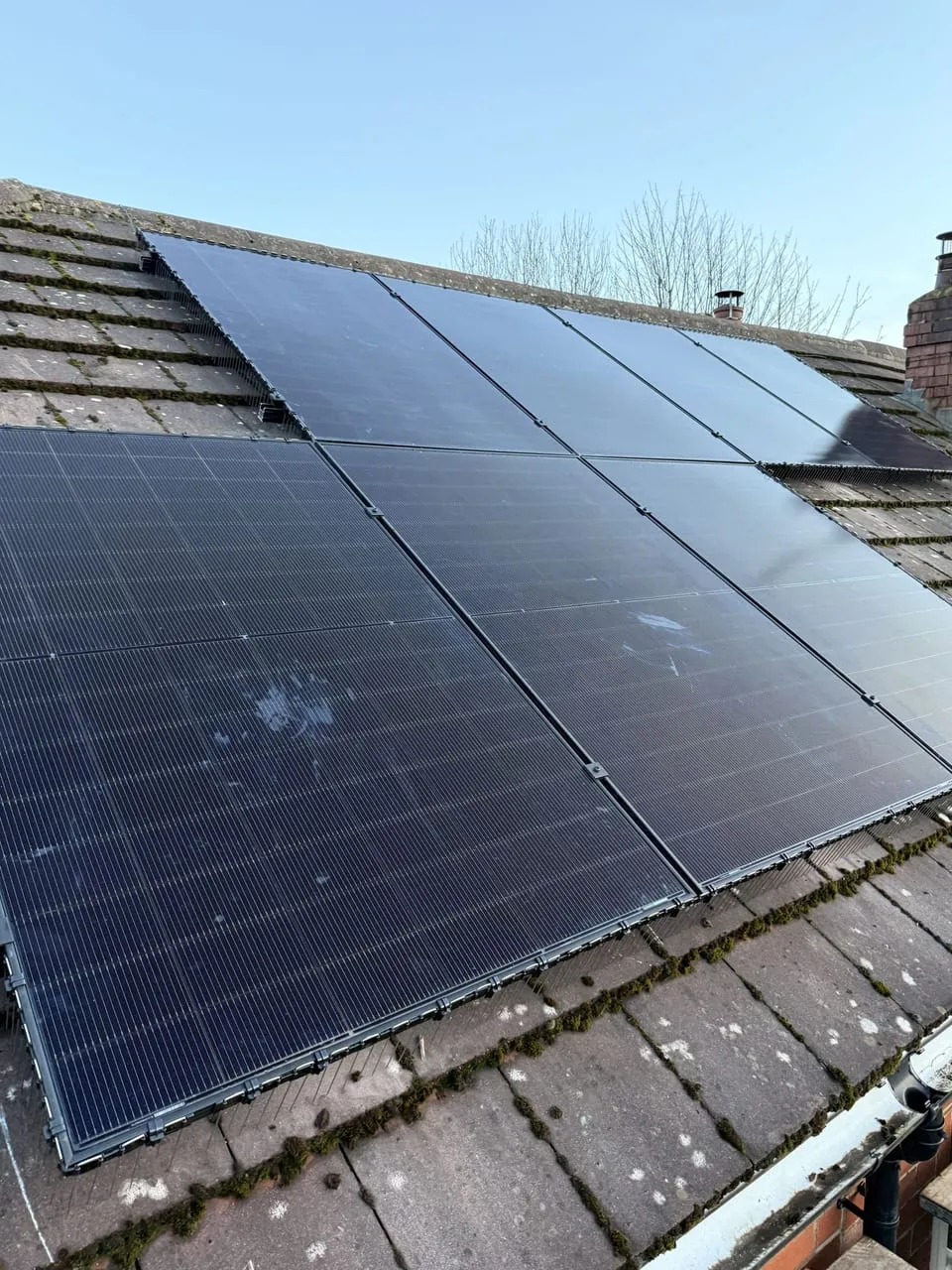
Search for “best solar panel brands” and you’ll mostly find lists written by people trying to sell you panels. Every brand is somehow “the best,” every warranty sounds identical, and nobody tells you which manufacturers actually turn up in UK installers’ vans versus which ones exist mainly in marketing PDFs. This is an attempt at something more useful: an honest look at the brands UK homeowners are actually being quoted in 2026 — JA Solar, Trina Solar, LONGi, AIKO, SunPower and REC — based on what the panels are, how they’re built, and what that means for a 25-year asset bolted to your roof.
We’re not selling panels and we have no commission riding on which brand you pick. If you want installer-specific advice for your postcode, that’s a conversation for a local MCS-certified fitter, not a blog. What we can do is explain the technology differences that actually matter and separate genuine engineering advantages from marketing noise.
Why brand matters less than the installer, but still matters
Before ranking anything: the single biggest driver of a solar system’s real-world performance is the design and workmanship of the install — shading analysis, string layout, inverter sizing, roof orientation. A mediocre panel installed well by a competent MCS-certified installer will usually outperform a superb panel installed badly. That’s not a dodge — it’s the first thing to get right before you even open a brand brochure.
That said, panel choice isn’t irrelevant. It affects three things you’ll live with for decades: how much roof you need for a given output, how the panel ages, and whether the manufacturer will still exist to honour a warranty claim in year 15. With that framing, here’s how the six brands stack up.
The tier-1 Chinese manufacturers: JA Solar, Trina Solar, LONGi
These three make up a huge share of what’s actually fitted on UK roofs, and for good reason: they’re vertically integrated (many control their own wafer, cell and module production), produce at colossal scale, and have driven the cost collapse that’s made solar affordable. All three are Bloomberg NEF “Tier 1” manufacturers, meaning they’ve demonstrated bankability to institutional lenders for at least several consecutive years — a reasonable, if imperfect, proxy for financial stability.
LONGi is the world’s largest solar manufacturer by volume and was an early mover into monocrystalline PERC and now N-type technology at scale. Its panels are widely specified on UK residential and commercial jobs, and its size means genuine R&D budget behind efficiency gains rather than just marketing spend.
Trina Solar has a similarly long track record and has pushed hard into larger-format modules and its own N-type TOPCon lines (branded Vertex). It’s a common sight on both residential 4kW systems and larger commercial arrays — you’ll see Trina panels specified on projects from single homes right up through the kind of installs covered on solarpanelsforfactories.co.uk.
JA Solar rounds out the trio with a similar profile: high-volume, N-type TOPCon focus, competitively priced, and a long enough public track record (listed, transparent financials) that installers are comfortable specifying it.
The honest verdict on all three: genuinely good, bankable panels at competitive prices, with the caveat that “Tier 1 Chinese manufacturer” isn’t a single homogenous category — spec sheets, warranty terms and degradation curves vary between them and between product lines from the same manufacturer, so ask your installer which specific model (not just which brand) they’re quoting.
AIKO: the newer name worth knowing
AIKO Solar is a more recent entrant to UK conversations, built around back-contact cell technology (ABC — All Back Contact), which moves the electrical contacts to the rear of the cell so there’s no visible grid line on the front. The practical upside is a marginal efficiency gain (no front-surface shading from busbars) and, for what it’s worth, a cleaner all-black aesthetic that some homeowners prefer on visible roof pitches. AIKO’s technology is genuinely interesting and the efficiency numbers are competitive with the best N-type panels on the market.
The caveat is track record length: AIKO is a newer name in UK residential installs than LONGi, Trina or JA Solar, so there’s less multi-decade field data specific to that back-contact design in the UK climate. That’s not a reason to dismiss it — back-contact technology (Sunpower/Maxeon pioneered the concept decades ago) isn’t unproven in principle — but it is a reason to ask your installer specifically how many AIKO systems they’ve fitted and for how long, rather than assuming brand-new equals best.
SunPower / Maxeon: premium positioning, complicated recent history
SunPower panels (now largely manufactured and sold under the Maxeon brand outside North America, following corporate restructuring) have long marketed themselves as the premium end of residential solar, built around Maxeon’s own back-contact IBC cell architecture — the same broad family of technology AIKO’s ABC cells sit in, and a genuine precursor to it. Maxeon panels typically carry among the longest warranties in the industry and historically some of the highest efficiency ratings for residential-format panels.
The thing UK buyers should know going in: SunPower’s corporate structure has been through significant upheaval in the past few years, including the US parent’s 2024 bankruptcy filing, with Maxeon continuing as a separate listed entity focused on international markets. None of that means today’s Maxeon panels are poor products — the underlying cell technology remains genuinely premium — but a warranty is only as good as the company behind it in year 20, and that’s worth a direct question to any installer quoting SunPower or Maxeon: who underwrites the warranty now, and what’s the claims process if the original entity changes again.
REC Group: the Norwegian-owned, quietly strong option
REC Group (Norwegian-owned, manufacturing primarily in Singapore) has built a reputation in the UK and European markets as a reliable, well-regarded mid-to-premium brand without the volatility that’s affected some competitors. Its Alpha Pure series (heterojunction, HJT) is genuinely well regarded for performance in real-world UK conditions — HJT cells tend to handle heat and partial shading a little better than standard PERC, which matters more than most spec sheets let on given the number of UK roofs with a chimney, dormer or vent pipe casting partial shade for part of the day. REC’s warranty terms and reputation for stability make it a sensible mid-market pick when a buyer wants something a step up from base-tier commodity panels without stretching to full premium pricing.
So which is “best”? A framework, not a crown
| Priority | Reasonable pick(s) | Why |
|---|---|---|
| Lowest cost per watt | JA Solar, Trina, LONGi | Scale manufacturing, Tier 1 bankability, huge UK install base |
| Best shade/heat tolerance | REC Alpha Pure (HJT), AIKO (ABC) | Cell architecture reduces losses from partial shading |
| Longest track record on a specific model | LONGi, Trina, JA Solar | Years of UK field data across thousands of installs |
| Premium aesthetics + historically highest residential efficiency | SunPower/Maxeon | IBC back-contact design, but check current warranty backing |
| Newest cell technology, cleanest look | AIKO | ABC back-contact, but shorter UK track record |
For most homeowners getting a straightforward 10-16 panel system on a south-or-similar-facing roof with minimal shading, a Tier 1 N-type panel from JA Solar, Trina or LONGi represents the best value-for-reliability trade-off in 2026 — this is what the bulk of the UK’s record 257,397 MCS installs in the past year were actually built from. If your roof has genuine partial-shade issues, REC or AIKO’s shade-tolerant cell architecture is worth the modest premium. SunPower/Maxeon remains a legitimate premium choice but deserves the extra warranty due-diligence question given recent corporate changes.
What we’d steer you away from is any brand your installer can’t name a UK installation history for, or any quote that leads with the brand name and buries the actual spec sheet (wattage, efficiency %, temperature coefficient, degradation rate, warranty years and who underwrites it). A good installer — whether that’s a specialist working across Essex and East Anglia or a team covering Doncaster and South Yorkshire — should be able to talk you through two or three brand options against your specific roof, not just push whatever’s cheapest to source that month.
What actually determines your return, brand aside
Every brand above meets broadly similar minimum standards now: modern N-type panels (TOPCon, HJT, ABC) typically degrade around 0.4% per year and are warrantied for 25-30 years, a big improvement on the ~0.5-0.8%/yr degradation of older PERC panels. The differences between the brands above are real but marginal next to the bigger levers: system size versus your actual usage, whether you add a battery, and your roof’s orientation and shading.
If you’re still at the stage of working out what a system should cost before you start comparing brand names, our guide to UK solar panel costs breaks down realistic 2026 pricing by system size, and the solar panel payback period guide walks through how brand-level efficiency differences translate (or don’t) into meaningfully faster payback. It’s also worth reading our piece on whether solar panels actually work in the UK climate if you’re still weighing up the basics before brand shopping — cloudy-day generation is a bigger question for most buyers than the half-percent efficiency gap between two Tier 1 manufacturers.
Remember too that the 0% VAT rate on residential solar and battery installations runs until 31 March 2027 in Great Britain, after which it’s scheduled to revert to 5% — a genuine reason to get quotes in now rather than agonising over the last percentage point of panel efficiency. Get two or three quotes from installers who’ll tell you honestly which brand they’d put on their own roof, ask for the actual datasheet rather than a marketing brochure, and treat “best brand” as a much smaller decision than “best installer, correctly sized system, sensibly shaded roof.”
Frequently asked questions
None of the answers below are definitive brand rankings — they’re the practical questions that actually decide a good outcome.