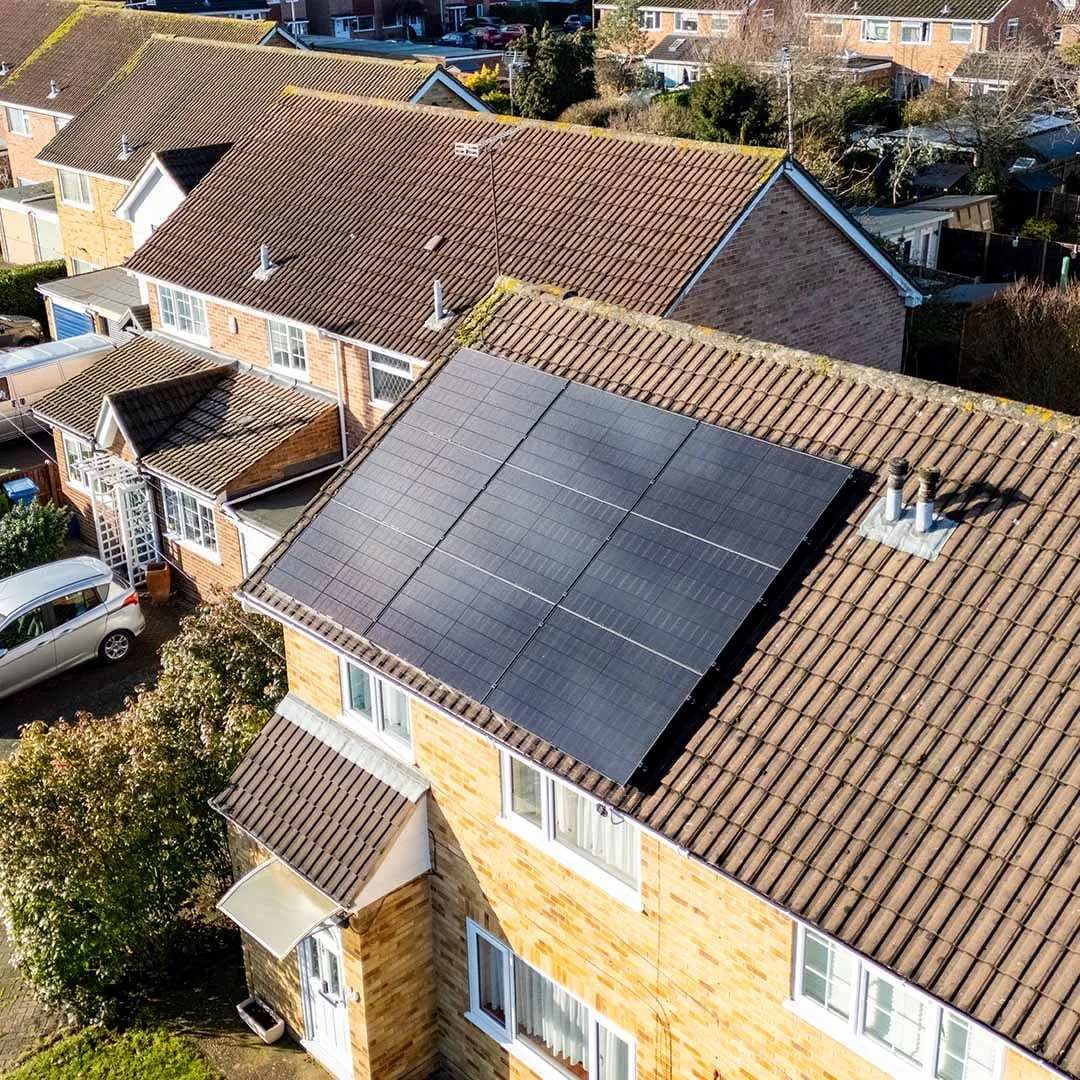
Solar quotes are full of numbers that sound reassuring — “25-year warranty!”, “30-year performance guarantee!” — but two panels with near-identical stickers on the box can carry very different levels of real-world protection. Understanding what’s actually promised, by whom, and for how long is one of the few genuinely useful pieces of homework you can do before signing anything. It matters more than the brand name on the panel.
Three warranties, not one
Every solar installation actually carries three separate guarantees, and installers (deliberately or not) often blur them into a single “25-year warranty” soundbite. They’re not the same thing, they’re not backed by the same party, and they don’t fail in the same way.
1. Product warranty (materials and workmanship on the panel itself) This covers manufacturing defects — delamination, frame corrosion, junction box failures, glass cracking that isn’t your fault. Historically this sat at 10-12 years. The better modern manufacturers (particularly those making N-type TOPCon, heterojunction (HJT) and back-contact (ABC) cells) now offer 25, 30, or even 40 years on the product itself, not just performance. That’s a genuine shift from a decade ago, when 10 years was standard and 25 was the exception reserved for premium ranges.
2. Performance (power output) guarantee This is the one most homeowners actually mean when they say “warranty.” It guarantees the panel will still produce at least a stated percentage of its original rated output after a set number of years — typically something like “98% after year 1, degrading no more than ~0.4-0.5% a year, guaranteeing ~87-92% output at year 25-30.” Modern N-type panels degrade more slowly than the older P-type (PERC) panels that dominated the market until recently, which typically lost closer to 0.5-0.7% a year. Over 25 years that difference compounds to several percentage points of extra output — worth checking on the datasheet, not just taking the sales pitch’s word for it.
3. Workmanship warranty (the installer’s own guarantee) This is completely separate from the panel manufacturer and covers the installation itself — mounting, wiring, waterproofing of roof penetrations, inverter commissioning. It’s usually 2-10 years and it’s the one that actually matters most in the first decade, because most early failures are installation faults (a poorly flashed roof penetration, a loose MC4 connector, an undersized cable run) rather than manufacturing defects. A 30-year product warranty is worthless in year 3 if the installer who fitted it has gone out of business and nobody will honour the workmanship claim. This is precisely why MCS certification matters when you’re choosing who does the physical install — MCS-certified installers carry insurance-backed guarantees through schemes like the MCS Consumer Code, which can outlive the individual company if it folds.
What’s actually covered — and what isn’t
Reading the small print matters because “warranty” doesn’t mean “free replacement, no questions asked, forever.”
Typically covered:
- Manufacturing defects causing measurable power loss beyond the guaranteed degradation curve
- Physical defects not caused by external damage (delamination, hot spots from cell defects, corrosion of internal components)
- Inverter faults within the inverter’s own warranty period (usually shorter than the panel’s — see below)
Typically not covered:
- Damage from extreme weather events (though panels are tested to withstand significant hail and wind loads — check the IEC 61215/61730 certification)
- Damage from third parties (falling branches, other trades working on the roof afterwards)
- Normal degradation within the guaranteed curve (a panel producing 91% of rated output at year 25 when the guarantee promised 90% is performing correctly, not failing)
- Cosmetic issues that don’t affect output
- Any fault arising from an installation not carried out, or subsequently modified, by an MCS-certified installer
The inverter is the weak link
Here’s the bit warranty marketing conveniently glosses over: string inverters typically last 10-15 years and carry warranties of 5-12 years as standard (extendable on some brands), while the panels themselves are now routinely warrantied for 25-40 years. That means most homeowners with a 4-6kW residential system should budget for one inverter replacement across the panels’ lifetime, at roughly £500-£1,000 depending on system size and inverter type. It’s not a hidden scandal, just an asymmetry worth planning for financially rather than being surprised by it at year 12. Micro-inverter and power-optimiser systems typically carry longer inverter warranties (sometimes matching the panels at 25 years) because the electronics are distributed and lower-stress per unit — worth asking about explicitly if you want warranty parity across the whole system.
Who’s actually standing behind the promise
This is the single most important practical question, and it’s the one buyers ask least. A 30-year warranty from a manufacturer with no UK presence, no UK-based service partner, and a habit of appearing and disappearing from the market is a different proposition to a warranty from an established Tier 1 manufacturer with UK distribution. Ask your installer directly: if the manufacturer folds, is there a warranty insurance policy (some manufacturers back their guarantees with a separate insurance-backed warranty, precisely for this scenario) or are you relying on the manufacturer’s balance sheet alone?
The same logic applies to workmanship. A one-person outfit that installed your system for a rock-bottom quote may simply not exist in year 6 when a roof penetration starts letting water in. This is why it’s worth choosing installers who’ve been trading for years and have a visible track record — regional firms like Yorkshire’s YEERS, Kent-based Hazell Electrical, or South Wales installer FLD Electrical are the kind of established local businesses where a workmanship claim in year 8 has somewhere real to land, rather than an email address that’s gone quiet.
Reading a real datasheet, not the brochure
Before signing anything, ask your installer for the manufacturer’s actual datasheet (a two-page PDF, not the marketing brochure) and check three figures:
| What to check | What “good” looks like in 2026 |
|---|---|
| Year-1 degradation | ≤2% (better N-type panels: ≤1%) |
| Annual degradation thereafter | ≤0.4-0.5%/yr (older P-type: 0.5-0.7%/yr) |
| Guaranteed output at year 25-30 | ≥87.4-92% of original rating |
| Product warranty | 25 years minimum from a reputable manufacturer; 30-40 available |
| Workmanship warranty | 2-10 years from the installer; longer is better but check what’s actually included |
| Inverter warranty | 5-12 years standard; ask about extended cover or a replacement budget line |
If a quote doesn’t let you see this data, that’s itself a signal — a legitimate installer should be able to hand over the datasheet without friction. This is also where MCS certification earns its keep: it’s a prerequisite for the Smart Export Guarantee, so an uncertified install doesn’t just risk the warranty, it locks you out of getting paid for exported electricity at all.
Warranties and value for money aren’t the same conversation
None of this is a reason to over-index on warranty length at the expense of the basics — a longer warranty on a badly-specified, undersized, or badly-sited system is not a good deal. Understanding what a system should actually cost for your roof and usage is a separate and equally important piece of homework; thecostofsolar.co.uk’s UK pricing guide is a useful independent reference for what a 2026 quote should look like before you start comparing warranty terms line by line. It’s also worth remembering that 0% VAT currently applies to residential solar and battery installations in Great Britain until 31 March 2027, which is a bigger and more time-sensitive saving than most of the warranty differences between Tier 1 manufacturers — get the installation booked within that window if you’re on the fence.
Battery storage complicates the warranty picture further, since batteries degrade by charge cycles as well as time, and manufacturers typically guarantee a number of cycles alongside a year figure (commonly 6,000-10,000 cycles or 10 years, whichever comes first) — worth reading separately from the panel warranty rather than assuming they match. If you’re weighing up whether a battery is worth adding now or later, our sister guide on solar battery storage costs breaks down current UK pricing.
What to actually do with this
- Get the datasheet, not just the brochure, for the specific panel model quoted (not “a panel like this one”).
- Separate the three warranties in your head — product, performance, workmanship — and ask what each one specifically covers and excludes.
- Confirm the installer is MCS-certified and check how long they’ve been trading; a workmanship warranty is only as good as the company behind it.
- Ask explicitly about the inverter warranty length and what a replacement would cost outside that window.
- Keep your paperwork — the datasheet, the installation certificate, and the workmanship warranty document — somewhere you’ll actually find it in 12 years’ time. It’s the single most common reason genuine warranty claims get delayed or refused.
A solar array is one of the few home improvements sold with genuinely long-dated promises attached. Reading past the headline number to who’s actually backing it, and for what, is the difference between a warranty that protects you and one that’s just a number on a brochure.