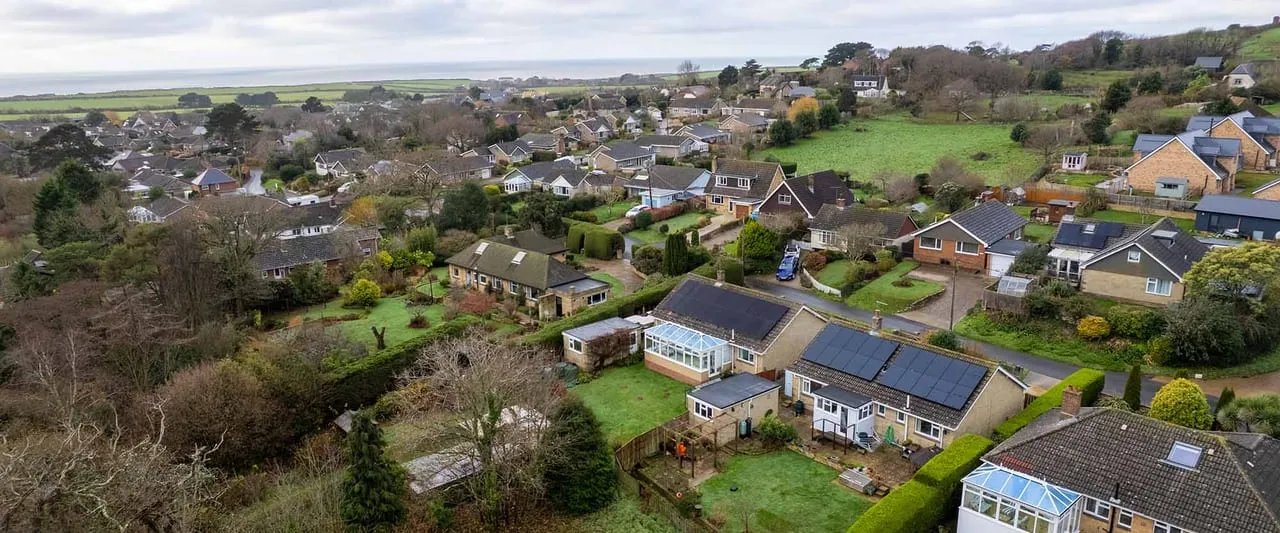
Solar panels are sold on the promise of “fit and forget” — and largely, that promise holds. But fit-and-forget isn’t the same as fit-and-ignore. With over 257,000 MCS installations completed across the UK in 2025 alone, a huge wave of systems are now moving out of their “everything’s new” phase and into the years where a bit of basic upkeep pays for itself many times over. This guide covers what solar panel maintenance actually involves in 2026 — cleaning, inverter life, monitoring, insurance, and a full seasonal checklist — with no scaremongering and no invented figures.
Do solar panels actually need maintenance?
Less than most people assume, but not zero. Modern panels have no moving parts, so there’s nothing to wear out in the way a boiler or a car engine wears out. The main things that degrade performance over time are:
- Dirt, dust, pollen and bird droppings sitting on the glass and blocking light
- Shading from trees or new extensions that has grown up since installation
- Inverter ageing — the one component that does have a finite working life
- Loose connections or damaged cabling, usually from wildlife, weather or a poor original install
- Snow, ice and moss around the frame edges in wetter, shadier parts of the country
None of these need constant attention. A sensible maintenance rhythm is closer to “check twice a year, deep-clean occasionally, and keep an eye on performance data” than anything resembling a service contract.
Cleaning: how often, and does it actually matter?
For most UK roofs, rain does the bulk of the cleaning job for you. Panels are tilted, glass is smooth, and typical British weather washes off general dust reasonably well. Where cleaning genuinely moves the needle:
- Low-pitch roofs (under about 15°) that don’t self-clean as effectively
- Rural and agricultural sites near dust, pollen or bird activity
- Coastal properties with salt spray build-up
- Anywhere near trees dropping sap, leaves or heavy pollen in spring
A build-up of grime can cost a few percent of output — noticeable on a monitoring app, but rarely worth panicking over on a typical semi-detached roof. Commercial and agricultural roofs are a different story: a large warehouse or barn array with visible soiling across hundreds of panels can lose enough generation to justify a proper contract clean once or twice a year. If you’re running a larger system, it’s worth reading how sites like solarpanelsforfarms.uk and solarpanelsforwarehouses.co.uk frame maintenance for bigger arrays — the economics of a clean scale very differently once you’re talking hundreds of kWp rather than a 4kW roof.
For homeowners, the practical advice is simple: don’t get on the roof yourself. A domestic clean, if genuinely needed, is a job for someone with the right access equipment (or, in some cases, a soft-brush water-fed pole from the ground). Panel manufacturers explicitly warn against pressure washers and abrasive brushes — they can scratch anti-reflective coatings or force water past seals. If output has visibly dropped and it isn’t shading or a fault, a specialist clean once every 1-2 years is plenty for most homes.
Inverter replacement: the one part that will need attention
This is the maintenance item people underestimate most. Panels are commonly warrantied for 25-30 years and modern N-type cells (TOPCon, HJT, ABC) degrade at roughly 0.4% a year — meaning a system installed today should still be producing well over 85-90% of its original output at 25 years. Inverters don’t last that long.
A typical string inverter has a working life of around 10-15 years, and replacement typically costs somewhere in the £500-£1,000 range depending on system size and whether it’s a straight swap or involves upgrading DC isolators and wiring to current standards at the same time. If your system was installed in the early-to-mid 2010s, this is worth budgeting for now rather than waiting for a failure. Signs an inverter is on the way out:
- Unusual noise (buzzing or humming that’s new, not just normal operation)
- Error codes or fault lights that recur after a reset
- A generation drop that monitoring shows isn’t explained by weather or shading
- The display or app simply going dark with no data coming through
If you have a hybrid inverter tied to a battery, replacement decisions get more involved — it’s worth getting a quote from whoever holds your MCS certificate, since like-for-like doesn’t always make sense if battery capacity or export limits have moved on since install. Installers such as ecoaim.co.uk in Central Scotland and premierelectricalrenewables.co.uk both handle inverter and battery retrofit work alongside new installs, which is a useful thing to check when you’re choosing who to call — not every installer wants to take on a service job on a system they didn’t originally fit.
Monitoring: your early-warning system
The single most useful piece of “maintenance” most homeowners can do costs nothing: check the monitoring app every few weeks. Almost every system installed since MCS certification became standard practice comes with some form of generation monitoring, whether that’s the inverter manufacturer’s own app, an in-home display, or a third-party platform.
What to actually look for:
- Seasonal shape, not absolute numbers. A 4kW system in the south of England might produce noticeably more over a year than the same system in Scotland, given the range in typical UK yields (roughly 850 kWh per kWp annually nationally, higher in sunnier regions). What matters is whether this month looks like last year’s equivalent month, not a big national average.
- Sudden, unexplained drops. A gradual seasonal decline is normal. A sharp drop that isn’t explained by weather usually means a fault, a tripped isolator, or a shading issue (new tree growth, a neighbour’s extension, scaffolding).
- One string or panel underperforming relative to the rest on systems with panel-level (micro-inverter or optimiser) monitoring — this narrows a fault down fast rather than needing a full roof inspection.
If you’re claiming Smart Export Guarantee payments, monitoring data also matters commercially — most SEG suppliers rely on either a smart meter feed or your own export meter reading, and spotting a fault early protects the export income you’re actually being paid for (rates vary by supplier, broadly in the 12-20p/kWh range at the better end, so a fault sitting unnoticed for months is a real, if usually modest, loss).
Insurance: what’s covered, what isn’t
Solar panels are generally treated as a permanent fixture of the building by home insurers, meaning they should be covered automatically under your existing buildings insurance in the same way a roof or a boiler is — but “should be” is doing some work in that sentence. In practice:
- Tell your insurer you have solar panels. Not disclosing them can, in the worst case, void a claim if something goes wrong. It’s a five-minute phone call or a line on your renewal form, and most insurers don’t increase premiums meaningfully for a standard domestic array.
- Check storm and impact damage is included — most policies cover this as standard, but it’s worth confirming rather than assuming, particularly for older policies taken out before your panels were fitted.
- MCS certification matters for more than SEG eligibility. It’s also often what an insurer or a future buyer’s solicitor will ask to see as proof of a competent, compliant installation.
- Battery storage may need a separate mention on the policy, particularly for larger installed capacities.
- Workmanship warranties (typically the installer’s own 10-year cover) and product warranties (panel and inverter manufacturer, often 12-25 years) are not insurance — they only pay out if the company involved still exists and can be traced. Keep paperwork, invoices and MCS certificates somewhere safe and accessible, ideally digitally as well as on paper.
If you’re not sure your existing installer is still trading and reachable for a service call, that’s a good moment to build a relationship with a local, MCS-certified firm who can service a system regardless of who originally fitted it — installers like fldelectrical.co.uk in South Wales, hazellelectrical.co.uk in West Kent, and alpselectrical.com all combine solar work with wider electrical certification, which matters if a maintenance visit turns up a wiring or isolator issue alongside the panel question.
The full solar panel maintenance checklist
Twice a year (spring and autumn):
- Visual check from ground level for visible dirt, debris, moss or nesting material
- Check the inverter display/app for error codes
- Compare current generation to the same period last year
- Check gutters and roof edges near the array for debris build-up
Annually:
- Review your SEG export payments against your monitoring data to confirm they broadly match
- Confirm your buildings insurance still lists the solar array and any battery
- Check cabling and DC isolators are undamaged where visible (never open isolator boxes yourself)
Every 1-2 years (or sooner if monitoring shows a drop):
- Professional clean if roof pitch, location or visible soiling justifies it
- A qualified visual inspection of panel condition, mounting and roof penetration seals
Around year 10-15:
- Budget for likely inverter replacement (£500-£1,000 for most domestic systems)
- Consider a full system health check, particularly before any home sale
Ongoing:
- Never walk on panels or attempt cleaning yourself from the roof
- Keep all warranty, MCS and insurance paperwork together and accessible
- Report any burning smell, unusual noise or visible scorch marks immediately and isolate the system if instructed by your installer
A quick word on cost context
If you’re weighing up whether ongoing maintenance is “worth it” against the original outlay — a typical 4kW system runs roughly £6,000-£8,000 installed in 2026, with 0% VAT still applying to residential solar and battery storage in Great Britain until 31 March 2027 — the running costs are genuinely modest by comparison. An occasional clean and an inverter swap once in the system’s lifetime rarely amounts to more than a small fraction of the original investment, especially set against 25+ years of free daytime electricity at a time when grid import costs sit around 25p/kWh on a typical tariff. For a fuller breakdown of what installation and running costs look like across system sizes, thecostofsolar.co.uk’s solar panel cost guide is a good companion to this piece, and our own guide to how solar panels actually perform in UK weather covers the generation side in more detail.
For anyone with a larger commercial roof rather than a domestic one — schools, care homes, offices — maintenance planning tends to be built into the original contract rather than left to the owner to remember, and it’s worth checking that’s genuinely the case before signing; hubs like commercialsolarpanelsinstallation.co.uk and solarpanelsforcarehomes.co.uk both cover what a proper commercial maintenance schedule should include.
The bottom line
Solar panel maintenance in the UK isn’t a big job, but it isn’t nothing either. Check your monitoring a few times a season, get panels cleaned only if the data or a visual check says you need to, budget realistically for an inverter replacement somewhere in the 10-15 year mark, and make sure your insurer actually knows the panels are there. Do those four things and a well-installed system should keep delivering close to its rated output for its full 25-30 year life with minimal drama.