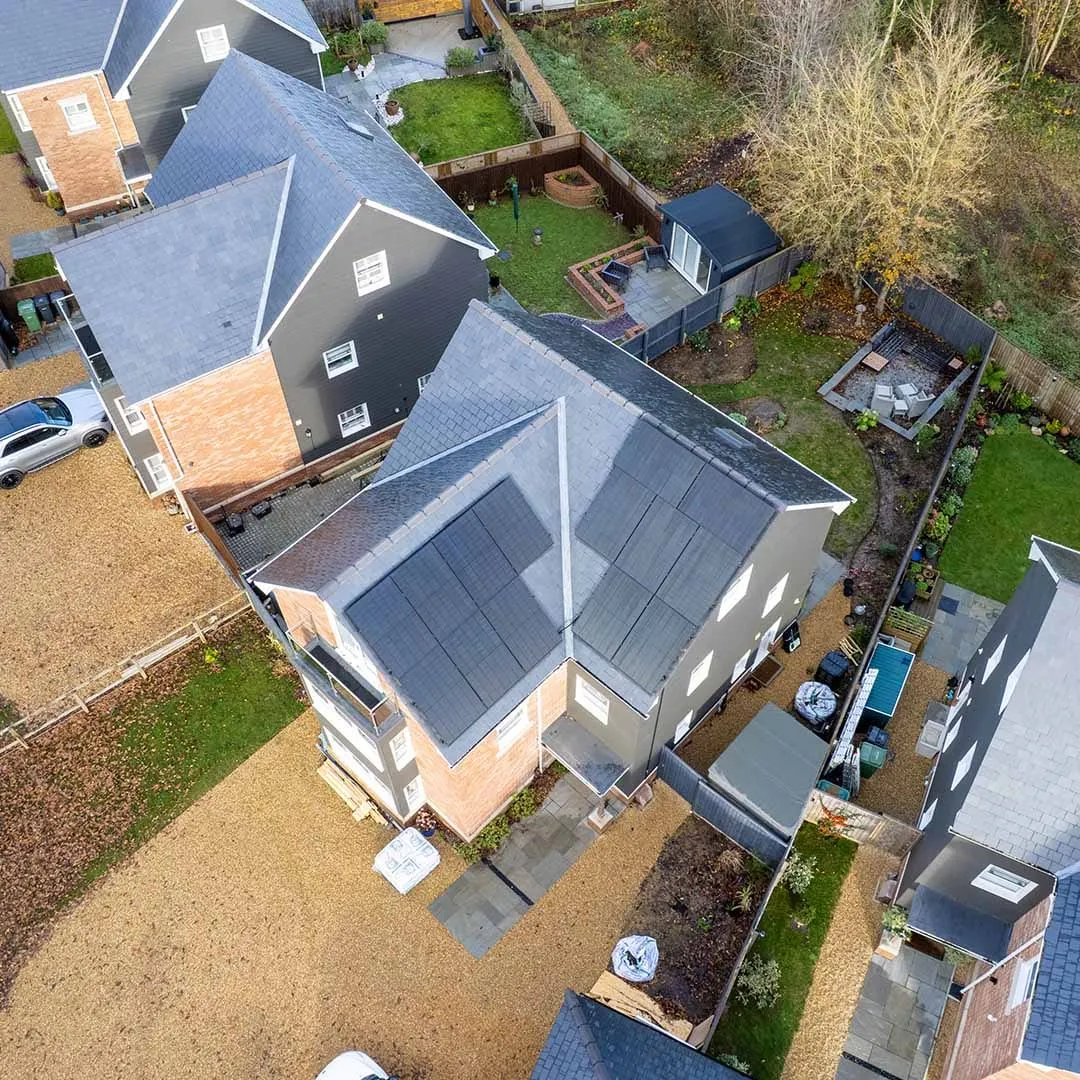
Birmingham is one of those cities where the maths on solar has quietly shifted in homeowners’ favour. With around 1,141,816 people living across a mix of Victorian terraces, 1930s semis and newer estates, and an average house price sitting near £245,000, the city is neither the sunniest nor the priciest patch of the UK — which makes it a genuinely useful test case for what solar actually delivers on an ordinary British roof, rather than a marketing brochure.
This guide sticks to what’s true for Birmingham and the wider West Midlands in 2026: real yield figures, real costs, the council’s actual climate policy, and where to find proper local installers rather than a national call-centre reselling someone else’s fitters.
What solar panels actually yield in Birmingham
Birmingham sits within the West Midlands solar resource band, where typical systems produce around 920 kWh per kWp per year — a shade above the UK-wide average of roughly 850 kWh/kWp, though still behind the south coast, which can push past 1,050 kWh/kWp on a well-angled, unshaded roof. That gap comes down to latitude and average cloud cover rather than anything unusual about Birmingham itself.
In practical terms, a typical 4kW residential array (around 9-10 panels on a standard semi) would be expected to generate roughly 3,600-3,700 kWh a year in Birmingham. Set against a typical household consumption of 2,700-3,500 kWh a year, that’s enough to cover a large share of daytime and shoulder-season usage, with the rest either exported or, increasingly, stored in a home battery for use after dark.
It’s worth being honest that yield in the West Midlands isn’t spectacular by UK standards — but it’s more than respectable, and the shortfall versus the south coast is smaller than most people assume: roughly 12-14% lower generation for the same size system, not the dramatic drop-off some sales reps imply when trying to talk people out of buying locally.
The numbers: cost versus Birmingham house prices
At 2026 prices, a typical 4kW system installed in the UK runs to roughly £6,000-£8,000, a modest 3kW system around £5,000, and a larger 10kW installation £13,000-£17,000. Crucially, residential solar and battery storage still carry 0% VAT in Great Britain until 31 March 2027, after which the rate is currently scheduled to revert to 5% — so anyone weighing up timing has a genuine, quantifiable reason to act sooner rather than later, not just a sales tactic.
Set against Birmingham’s average house price of around £245,000, a mid-sized 4kW system represents roughly 2.5-3% of the property’s value — a smaller outlay, proportionally, than a new kitchen in many cases, and one that (unlike a kitchen) pays part of itself back through lower electricity bills. With import electricity around 25p/kWh under the current Ofgem price cap, a well-sized system covering a meaningful share of daytime demand can realistically shave several hundred pounds a year off a typical bill, with payback periods commonly landing in the 7-11 year range depending on system size, self-consumption, and whether a battery is added.
For homeowners who want to model their own numbers rather than take a salesperson’s word for it, thecostofsolar.co.uk’s payback period calculator is a useful independent starting point before any quote arrives.
Battery storage and export rates
Adding a battery changes the equation. A typical home battery costs roughly £4,000-£8,000 installed (around £400-£700 per kWh of capacity), with a Tesla Powerwall 3 (13.5kWh) sitting at the premium end around £8,500-£10,500. In a city like Birmingham, where a decent chunk of solar generation happens while residents are at work, a battery lets households shift that midday surplus into the evening peak instead of exporting it for a fraction of its retail value.
On export, it’s worth being clear-eyed: the Smart Export Guarantee is not a single national rate. Rates vary by supplier and currently range from a few pence up to around 12-20p/kWh at the top end for the most competitive tariffs, so shopping around for an SEG deal matters almost as much as the installation itself. Whatever system size and battery combination you land on, MCS certification is a hard requirement for SEG eligibility — an uncertified installer, however cheap, locks you out of export payments entirely.
Permitted development — what Birmingham homeowners can install without planning permission
For the vast majority of houses in Birmingham, rooftop solar falls under permitted development rights, meaning no planning application is needed provided panels don’t protrude more than 200mm from the roof slope (on a pitched roof) or exceed reasonable height limits on a flat roof, and don’t overhang the roof’s edge. The exceptions that catch people out are listed buildings and properties in conservation areas — of which Birmingham has several, from Edgbaston to the Jewellery Quarter — where listed building consent or additional planning checks may apply. Flats and maisonettes generally fall outside permitted development and need a full application. Anyone unsure should check with Birmingham City Council’s planning department before committing to a design, rather than after panels are already ordered.
Birmingham City Council, Route to Zero, and what it means for solar
Birmingham City Council has set a net-zero target of 2030, delivered through its Route to Zero (R20) climate framework. R20’s stance on solar is explicitly supportive of commercial PV deployment, and it dovetails with the West Midlands Combined Authority’s Net Zero programme, which offers grant support specifically aimed at SMEs looking to decarbonise — a route worth investigating for any Birmingham business owner rather than a homeowner in isolation, since the residential grant landscape is much thinner (there’s no universal home-solar grant in England; support is largely limited to means-tested schemes like ECO4 for low-income, low-EPC households).
Where R20 is most tangible is around the city’s commercial and industrial base. Estates such as Aston Cross, Tyseley Industrial Estate, and Witton house exactly the kind of large, flat-roofed units where commercial solar makes the strongest financial case — and with average commercial energy spend in the city running around £55,000 a year, even a modest offset from rooftop generation moves the needle on operating costs. Business owners on those estates weighing up the numbers can get a proper regional breakdown via commercial solar costs in Birmingham, or look at what’s achievable more broadly through business solar in Birmingham. For unit owners specifically on estates like Tyseley or Witton, solarpanelsforindustrialunits.co.uk covers the roof-loading and array-sizing questions that come up on typical industrial sheds, and businesssolarcalculator.co.uk is a reasonable place to run a rough ROI before requesting formal quotes.
Who actually installs solar panels in Birmingham
This is where a lot of guides go vague, so let’s not. For homeowners in Birmingham and across the wider West Midlands, Midland Solar in Birmingham is a locally based option worth getting a quote from — being West Midlands-based matters because a local installer understands the region’s typical roof stock (a lot of solid-brick Victorian and inter-war terraces, plus newer estate housing with standard trussed roofs) and won’t need to travel far for post-install servicing.
Whoever you choose, the checklist stays the same regardless of postcode: confirm MCS certification (non-negotiable for SEG eligibility), ask for a generation estimate based on your actual roof pitch and orientation rather than a generic figure, get the warranty terms on panels and inverter in writing, and get at least two quotes. Modern N-type panels (TOPCon, HJT or ABC cell technology) now commonly carry 25-30+ year lifespans with degradation of around 0.4% a year, which is a meaningfully better proposition than the panels sold a decade ago — but the inverter is still typically the weak link, with string inverters generally needing replacement after 10-15 years at a cost of £500-£1,000.
Keeping panels performing once they’re up
Solar panels are low-maintenance but not zero-maintenance. A build-up of grime, bird mess or moss on a Birmingham roof — which, like most UK cities, sees its share of rain interspersed with dry, pollen-heavy spells — can shave a noticeable percentage off output if left unchecked for years. For homeowners wanting a proper rundown of what upkeep actually involves (and what’s a waste of money), thebritishsolarblog’s own guide to solar panel maintenance in the UK covers cleaning frequency, inverter monitoring, and warranty claim red flags in more depth than most installers will volunteer unprompted.
If a system starts underperforming after a few years — a fairly common query — it’s worth understanding first whether it’s a genuine fault or normal seasonal variation; solarmaintenancesolutions.com specialises specifically in solar operations and maintenance diagnostics nationally, which is a sensible second opinion if your original installer isn’t responsive.
Is it worth it in Birmingham in 2026?
Nationally, 2025 was a record year for UK solar, with 257,397 MCS-certified installations completed (up 32% on the prior year) and around 21.6 GW of capacity now delivering roughly 6.4% of UK electricity — a trend covered in more depth on solarweekly.co.uk’s look at the UK solar industry in 2026. Birmingham isn’t leading that surge on yield alone, but the combination of 0% VAT (while it lasts), council policy actively backing PV through Route to Zero, and a housing stock well suited to permitted-development installs makes the underlying case solid rather than sensational.
For anyone still weighing up whether solar genuinely works in a UK climate rather than a Californian one, it’s worth reading do solar panels work in the UK’s weather — and before choosing hardware, our guide to the best solar panels available in the UK is a good next stop. The honest summary for a Birmingham homeowner: get two or three quotes from installers who know the region, run the numbers against your own roof and usage rather than a generic estimate, and treat the VAT deadline as a real financial factor, not just urgency marketing.