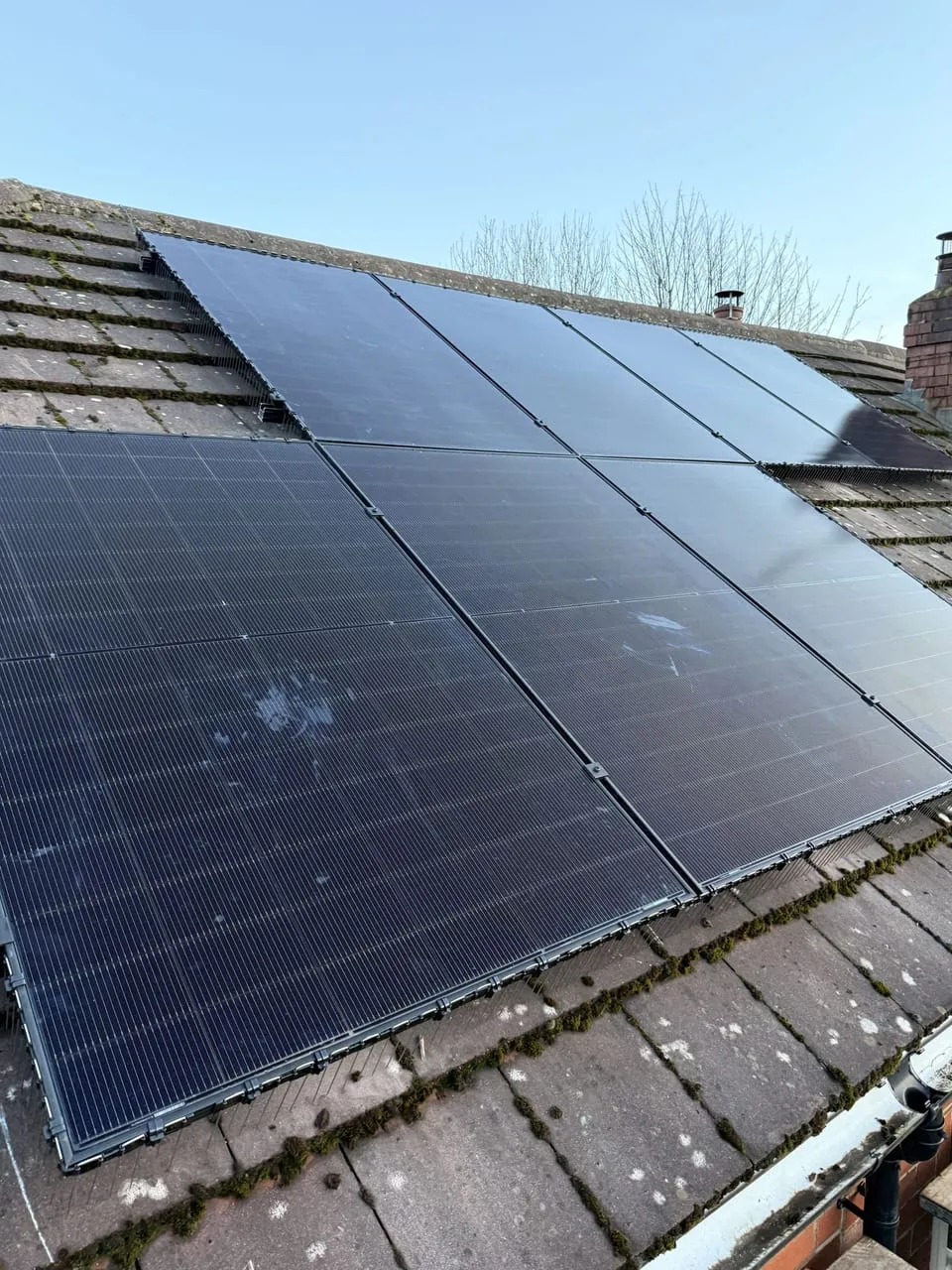
Bristol doesn’t get talked about as a solar city the way Cornwall or Kent do, but the numbers don’t support that reputation gap. Sitting in the South West, the city enjoys one of the better solar resources in England — and with average house prices running high and energy bills refusing to fall, a growing number of Bristol homeowners are doing the sums on their own roofs. This guide sets out what solar actually costs and yields here, how the council’s climate targets shape the backdrop, what permitted development rules mean for your roof, and who’s actually installing systems locally.
Why Bristol’s climate suits solar better than you’d think
Bristol sits within the South West region, which enjoys some of the best solar irradiance in the UK — typically around 990 kWh per kWp installed per year, comfortably above the UK average of roughly 850 kWh/kWp and not far off the sunniest parts of the country. In practice that means a well-specified 4kW system on a south-facing Bristol roof can realistically generate somewhere in the region of 3,700–4,000 kWh a year, before you even factor in east/west arrays (which still perform respectably, just with a flatter, wider generation curve rather than a single midday peak).
That yield matters because it’s the number that actually determines payback — not the marketing claims on a quote. Anyone comparing installers in Bristol should ask for a generation estimate based on your specific roof pitch, orientation and shading, not a generic regional average.
What solar actually costs against Bristol house prices
The average Bristol house price sits around £340,000, which is worth keeping in mind because it puts the cost of solar into proportion — a typical residential system is a low single-digit percentage of the property’s value, not the five-figure commitment it can feel like on paper.
Rough 2026 installed costs for a home system in the UK:
| System size | Typical installed cost | Approx. Bristol-region annual generation |
|---|---|---|
| 3 kW | ~£5,000 | ~2,800–2,970 kWh |
| 4 kW | ~£6,000–£8,000 | ~3,700–3,960 kWh |
| 10 kW | ~£13,000–£17,000 | ~9,300–9,900 kWh |
Two things currently work in Bristol homeowners’ favour on cost. First, 0% VAT applies to residential solar panel and battery storage installations across Great Britain until 31 March 2027, after which it’s scheduled to revert to 5% — so there’s a genuine, time-limited saving baked into any quote you get now versus one you might get in 2027. Second, with import electricity sitting around 25p/kWh under the Ofgem price cap, self-consumed solar generation is currently worth meaningfully more than exported units, which is why sizing a system (and increasingly a battery) around your own daytime usage pattern tends to beat maximising panel count for its own sake.
If you add a battery — typically £4,000–£8,000 installed, or up to around £10,500 for a larger unit like a Tesla Powerwall 3 — you can shift more of that daytime generation into evening use, which is where most Bristol households actually draw their heaviest load. For a proper breakdown of how these figures scale, thecostofsolar.co.uk’s guide to UK battery storage costs is a useful independent reference, as is a general run through of solar panel payback periods in the UK if you want to model your own numbers rather than take an installer’s word for it.
Bristol City Council’s climate stance — and what it means for homeowners
Bristol was one of the first UK cities to formally act on climate: Bristol City Council declared a climate emergency in 2018, and the city has set a target of reaching net zero by 2030 — a full two decades ahead of the UK’s national 2050 target. That ambition is codified in the Bristol One City Climate Strategy, the framework that coordinates action across the council, businesses, universities and community groups toward that 2030 goal.
On the investment side, the council operates City Leap, a green investment and energy partnership designed to unlock private capital into low-carbon infrastructure across the city — covering things like renewable generation, heat networks and energy efficiency at scale, rather than paying out grants to individual homeowners. It’s worth understanding the distinction: there is currently no universal residential solar grant in England. What does exist is means-tested support — ECO4 and Warm Homes schemes for lower-income households in lower-EPC-rated homes — plus the Boiler Upgrade Scheme, which is worth flagging precisely because it’s commonly misunderstood: the £7,500 Boiler Upgrade Scheme grant is for air source heat pumps, not solar PV. If you see a solar company implying otherwise, treat that as a red flag.
For homeowners, the practical upshot of Bristol’s climate positioning is less about direct cash and more about a council and regional culture that’s actively pro-solar — planning officers, local supply chains and public messaging all lean supportive, even if the money still comes largely from the homeowner’s own pocket (helped by that 0% VAT window).
Permitted development: what you can and can’t do without planning
For most Bristol homes, rooftop solar falls under permitted development and doesn’t need a separate planning application, provided the installation meets the standard national conditions: panels shouldn’t protrude more than 200mm from the roof slope, and (for flat roofs) shouldn’t exceed the highest part of the roof by more than a set limit, among other technical conditions set nationally rather than by Bristol specifically.
Where it gets more involved is in Bristol’s conservation areas and around its considerable stock of listed buildings — the city has large swathes of Georgian and Victorian terraces, notably around areas like Clifton, where conservation area status or listed building consent can bring solar installations into the planning system rather than permitted development. If your property is listed or sits in a conservation area, it’s worth checking with Bristol City Council’s planning department before committing to a design, since panel visibility from the street and roof material sensitivities can affect what’s approved. A reputable local installer who has worked across Bristol’s older housing stock should be able to flag this at survey stage rather than leaving you to discover it after signing a contract.
Who’s actually installing solar in Bristol
This is where a lot of generic “guides” fall down — they talk in national averages and never name a single local business. Bristol has a genuine base of MCS-certified installers, and MCS certification isn’t optional if you want your export payments recognised: it’s a prerequisite for the Smart Export Guarantee (SEG), the mechanism that pays you for electricity you send back to the grid. SEG rates aren’t fixed nationally — they vary by supplier, typically landing somewhere between roughly 12p and 20p/kWh at the better end of the market, so it’s worth shopping your export tariff separately from your installer.
For homeowners actually in the city, D&R Energy in Bristol is a locally based commercial-solar specialist worth getting a quote from, particularly if you’re weighing up a larger residential system or considering solar alongside a home office or annexe with heavier daytime load. If your property sits further out into the wider South West — toward the Cornwall or Somerset borders — CCS Heating & Renewables covers solar and renewable heating installs across that broader region and is a sensible second quote to gather for comparison.
Whoever you approach, get at least two or three quotes, check their MCS number independently on the MCS database rather than taking a certificate photo at face value, and ask specifically for a generation estimate modelled on your roof — not a stock regional figure.
Bristol’s business and industrial solar picture
Bristol isn’t just a residential solar story. The West of England Combined Authority (WECA) actively funds business decarbonisation programmes across the wider region, reflecting a genuine institutional push to get commercial rooftops generating, not just houses. The city’s key industrial estates — Avonmouth, Severnside and Brislington Industrial Estate — represent a significant stock of large, flat-roofed warehouse and light-industrial buildings that are close to textbook-ideal for commercial solar: big unshaded roof areas, high daytime electricity demand, and energy bills that make the payback case straightforward.
For context, the average commercial energy spend for a Bristol business sits around £45,000 a year — a figure that makes even a partial rooftop solar array capable of shaving a meaningful chunk off overheads within a handful of years, especially with commercial system costs running roughly £900–£1,200/kWp installed, well below the per-kWp cost of a small residential array.
If you run or manage premises on one of those industrial estates, or anywhere else across the city, it’s worth reading a proper breakdown of commercial solar costs in Bristol before approaching installers, so you’re negotiating from an informed position rather than accepting the first quote. For a wider look at business solar in Bristol specifically, including how commercial systems are typically sized and financed, that’s a useful next stop. Warehouse operators around Avonmouth and Severnside in particular should look at what solar panels for warehouses actually involves in terms of structural surveys and roof-loading checks before committing, and businesses weighing up whether to buy outright, lease the roof, or fund the system separately from capital budget may find it worth understanding commercial battery storage options alongside solar, since pairing the two is increasingly how larger Bristol-area sites are managing peak demand charges.
Maintenance, degradation and the long game
Solar isn’t a fit-and-forget purchase, though it’s close to it. Modern N-type panels (TOPCon, HJT or ABC cell technology, which most reputable installers are now fitting as standard) degrade at roughly 0.4% a year and are typically rated for 25–30+ years of useful life. The component more likely to need attention is the inverter — string inverters generally last 10–15 years and cost somewhere between £500 and £1,000 to replace when the time comes, which is worth budgeting for rather than being surprised by a decade in. For a general primer on what upkeep actually looks like, our own guide to solar panel maintenance in the UK covers the basics, and if you’re still weighing up whether panels are worth it at all in a country not famous for sunshine, do solar panels work in the UK? is worth a read before you get quotes.
Getting started
If you’re a Bristol homeowner thinking about solar in 2026, the sensible order of operations is: check whether your property is listed or in a conservation area, get two or three quotes from MCS-certified installers with a proper site survey rather than a satellite-image estimate, compare SEG export rates separately from the installation quote, and factor in the 0% VAT window that’s currently running until March 2027. None of that requires waiting on a council grant that doesn’t exist for most households — it just requires doing the comparison properly, which is exactly where most people skip a step and pay for it later. Bristol’s solar resource, its climate-committed council, and a genuine base of local installers all point the same direction; the only variable left is doing the legwork on your own roof.