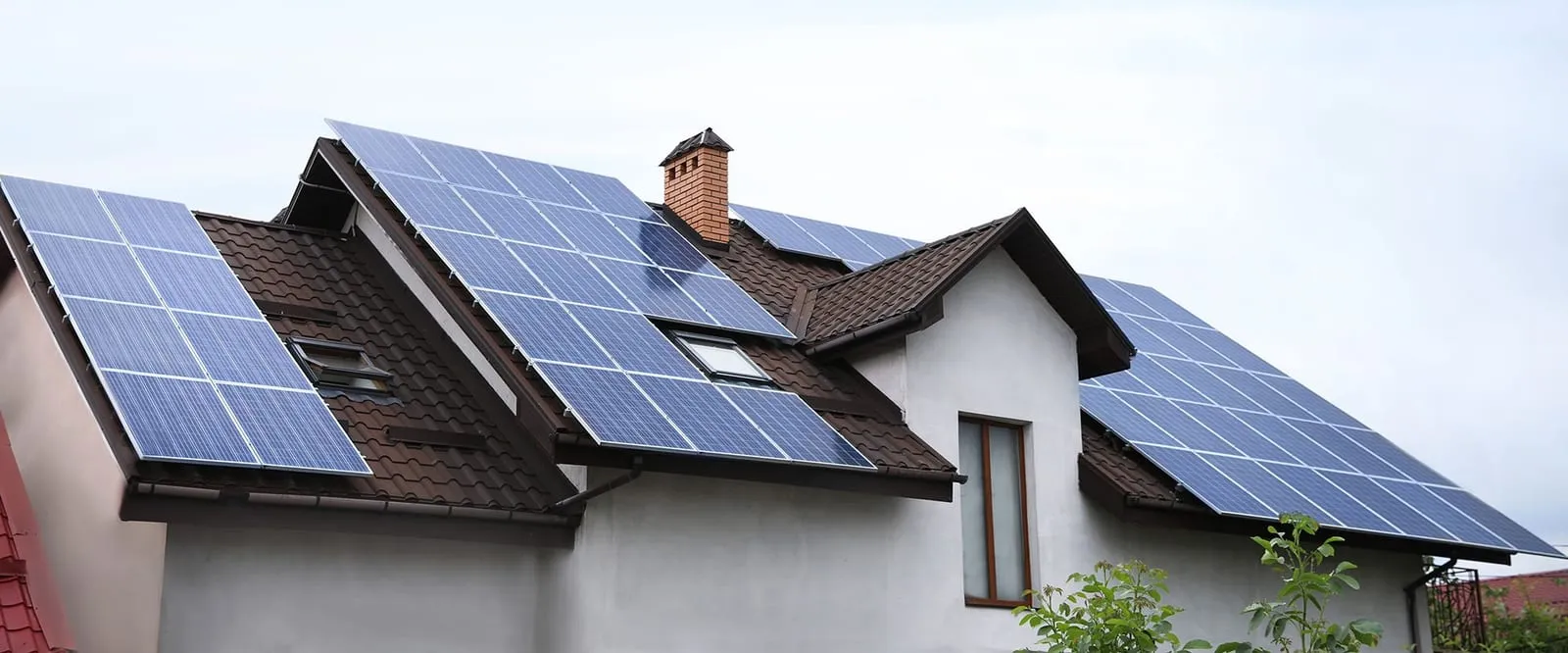
Leeds is a city of 793,139 people sitting in Yorkshire and the Humber, which isn’t the sunniest corner of Britain but is far from a bad place for solar. Between a temporary 0% VAT window on residential solar and battery storage (running until 31 March 2027), rising interest in energy independence, and a council that has put its name to a 2030 net-zero target, more Leeds homeowners are asking a straightforward question: does solar actually make sense on my roof, in this city, right now? This guide answers that honestly — yields, real costs against local house prices, what the council’s climate policy does and doesn’t mean for you, and who’s actually installing in the region.
What solar yield really looks like in Leeds
Solar output in the UK is driven by latitude, roof orientation and shading more than by anything else, and Yorkshire and the Humber sits towards the lower-middle of the UK yield range — typically around 860 kWh per kWp installed per year, against up to 1,050+ kWh/kWp in the sunniest parts of the south coast. That’s not a huge gap. A well-sited, south-facing, unshaded roof in Leeds will still produce a genuinely useful amount of electricity across the year; it just means payback calculations should use Yorkshire-realistic numbers rather than the more optimistic figures you’ll see quoted for Cornwall or Kent.
In practical terms, that 860 kWh/kWp figure means:
| System size | Typical installed cost (2026) | Approx. annual generation in Leeds | Notes |
|---|---|---|---|
| 3 kW | ~£5,000 | ~2,580 kWh | Smaller terraced/semi roofs |
| 4 kW | £6,000–£8,000 | ~3,440 kWh | Most common domestic size |
| 10 kW | £13,000–£17,000 | ~8,600 kWh | Larger detached homes, bigger roofs |
Those are indicative generation figures based on the regional 860 kWh/kWp average — your own output will depend on roof pitch, orientation and any overshadowing from neighbouring terraces, chimneys or trees, which is common on Leeds’s older Victorian and 1930s housing stock. A decent installer will run a proper shading and orientation assessment rather than just quoting off a satellite image.
What it costs against what your house is worth
The average Leeds house price sits around £220,000. Set against that, a typical 4kW domestic system at £6,000–£8,000 represents roughly 3% of the average property’s value — a meaningful outlay, but one that’s increasingly treated as a normal home improvement rather than a luxury purchase, particularly with electricity import prices sitting around 25p/kWh (Ofgem price cap territory, though it moves with each quarterly review).
Whether solar pays for itself faster than, say, a kitchen refit depends heavily on how much of your generated electricity you actually use in the home versus export back to the grid. Self-consumption is the variable that decides most Leeds solar economics: a household home during the day, or one that adds a battery to shift daytime generation into the evening, will get through payback meaningfully faster than a two-income household that’s out from 8am to 6pm and exports most of what the panels produce. A home battery — typically £4,000–£8,000 installed, or £8,500–£10,500 for something like a Tesla Powerwall 3 — changes that equation but adds to the upfront bill, so it’s worth running the numbers both ways before committing. For a proper breakdown of how the sums stack up, thecostofsolar.co.uk’s payback period guide is a useful independent reference, and our own look at whether solar panels actually work in the UK climate covers the generation-vs-weather question in more depth.
Export income adds to the picture too, via the Smart Export Guarantee (SEG) — but be wary of anyone quoting a single “SEG rate” as if it’s fixed nationally. It isn’t. Export tariffs vary by supplier and currently range from a few pence up to around 12–20p/kWh at the top end for the best deals, and you need an MCS-certified installation to be eligible at all. Shop your export tariff separately from your installer quote; the two are not the same decision.
VAT, grants and what’s actually on the table in 2026
Here’s the one piece of good news that applies to every Leeds homeowner right now: residential solar panels and battery storage installations qualify for 0% VAT in Great Britain until 31 March 2027, after which the rate is scheduled to return to 5%. That’s a straightforward, no-application discount baked into any quote you get — there’s nothing extra to apply for, and it’s worth checking your installer’s quote actually reflects it.
Beyond that, there isn’t a universal solar grant for homeowners in England, whatever some sales patter might imply. The schemes that do exist are means-tested: ECO4 and the Warm Homes scheme support low-income households in low-EPC-rated homes with a range of energy efficiency measures, which can occasionally include solar as part of a wider retrofit package, but they’re not a general-purpose subsidy for anyone wanting panels. It’s also worth being clear-eyed that the Boiler Upgrade Scheme’s £7,500 grant is for air source heat pumps — it does not cover solar PV, despite regularly being confused with a solar grant in casual conversation. If you’re weighing a heat pump alongside solar, budget for that as a genuinely separate scheme and a separate cost.
Nationally, the sector had a record year in 2025: 257,397 MCS-certified installations (up 32% year on year), taking cumulative UK solar deployment to around 21.6 GW — roughly 6.4% of UK electricity generation. SolarWeekly’s UK solar industry data has the fuller national picture if you want context on how fast the market is moving.
Leeds City Council’s climate plan and what it means for your roof
Leeds City Council has committed the city to a 2030 net-zero target, set out through the Leeds Climate Emergency Action Plan. For homeowners, that framework doesn’t translate into a personal solar subsidy or a mandate — there’s no council grant scheme specific to residential PV — but it does shape the planning environment you’re installing into. The council’s broader stance, echoed through the West Yorkshire Combined Authority’s Net Zero Toolkit, is explicitly supportive of SME and commercial solar installs across the city, and Leeds Council’s planning approach generally supports rooftop PV across the commercial estate rather than treating it as something to be resisted or slow-walked. If you’re a homeowner, that political direction of travel is favourable background, even if the direct financial levers (VAT relief, SEG, ECO4) come from national rather than local policy.
Permitted development: can you just fit panels?
For most houses in Leeds, rooftop solar falls under permitted development rights and doesn’t need a full planning application — the same national rules apply here as across the rest of England. The usual conditions are that panels shouldn’t project more than a set distance from the roof slope, shouldn’t be higher than the highest part of the roof (excluding chimneys), and should be removed or reused if no longer needed for microgeneration. Listed buildings and homes in conservation areas — of which Leeds has several, including parts of the city centre and older suburbs — are more likely to need consent, so it’s worth a quick check with the council’s planning department before ordering anything if your property falls into either category. Ground-mounted arrays and larger installations on flat commercial roofs are a different regime again, generally with more scope for approval given the council’s stated commercial-estate stance above.
Who’s installing solar in Leeds and West Yorkshire
Leeds sits within a reasonably well-served patch of the country for solar and renewables installers. YEERS in Leeds covers solar, battery, heat pump and EV charging work across Yorkshire and is a natural first call for anyone locally wanting a joined-up renewables quote rather than solar in isolation. A little further south, South Yorkshire has a cluster of established firms worth knowing about too — outfits like ElectriFusion Solutions, based around Doncaster and South Yorkshire, and AMP Pro Electrical, also Doncaster-based and covering electrical and renewables work, both operate within reasonable travelling distance of Leeds and are used to quoting on Yorkshire roof types and Yorkshire yield expectations rather than applying a generic national assumption.
Whoever you get quotes from, insist on MCS certification (it’s a prerequisite for SEG eligibility, not an optional extra), ask to see how they’ve calculated expected generation for your specific roof rather than a headline regional average, and get at least two or three comparable quotes — panel and inverter specs vary enough that price-per-panel comparisons alone can be misleading. On maintenance: modern N-type panels degrade at roughly 0.4% a year and are commonly warrantied for 25-30 years, but string inverters typically only last 10-15 years and cost £500-£1,000 to replace, so factor that into any 20-year payback model rather than treating the system as maintenance-free. Our guide to UK solar panel maintenance and round-up of the better panel brands on the UK market are both worth reading before you sign anything.
Leeds businesses: a different calculation entirely
If you’re reading this as a business owner rather than a homeowner, the maths changes substantially. Leeds’s commercial estate — including established industrial areas like Cross Green Industrial Estate, Stourton and Hunslet — carries average commercial energy spend of roughly £42,000 a year, which is the kind of bill where a well-sized commercial solar array (typically £900-£1,200 per kWp installed, well below residential per-kW pricing) can produce a materially faster payback than most domestic installs, simply because commercial premises consume power through daylight hours when panels are generating. For a fuller breakdown of what that looks like specifically for this city, thecostofsolar.co.uk’s piece on commercial solar costs in Leeds is worth reading alongside the Leeds-specific page on business solar in Leeds, which sets out the local commercial angle in more detail than a homeowner guide like this one needs to.
For businesses operating out of the industrial estates named above, it’s also worth looking at dedicated guidance for industrial unit solar, which addresses the flat-roof, high-daytime-load profile common to warehouse and unit space around Stourton and Hunslet, and a wider commercial solar installation hub if you’re comparing options before instructing anyone. Given the £42,000 average annual spend locally, running your own numbers through a business solar ROI calculator before commissioning a full survey is a sensible first step, and it’s worth checking current business solar grant eligibility too, since commercial support schemes shift more often than domestic ones.
Getting started: a realistic checklist
Before you get quotes, walk your own roof (or get a proper survey rather than a satellite estimate) and note orientation, pitch and any shading from chimneys, neighbouring terraces or mature trees — Leeds’s older housing stock varies a lot on this. Decide early whether you’re home enough during the day to benefit from self-consumption, or whether a battery makes more sense for your usage pattern. Get the 0% VAT applied on your quote without having to ask twice, confirm MCS certification before you sign anything, and separately shop your SEG export tariff rather than assuming your installer’s default is the best available. And be honest about your time horizon — with a Yorkshire yield of roughly 860 kWh/kWp/yr, this is a decade-plus investment, not a same-year win, and it’s worth planning inverter replacement into your 20-year cost picture from day one.
None of that requires a subsidy scheme that doesn’t exist, or a fabricated “Leeds solar grant” you might see floated online. It requires an honest read of your roof, your usage, and a quote from someone used to quoting Yorkshire jobs rather than national averages.