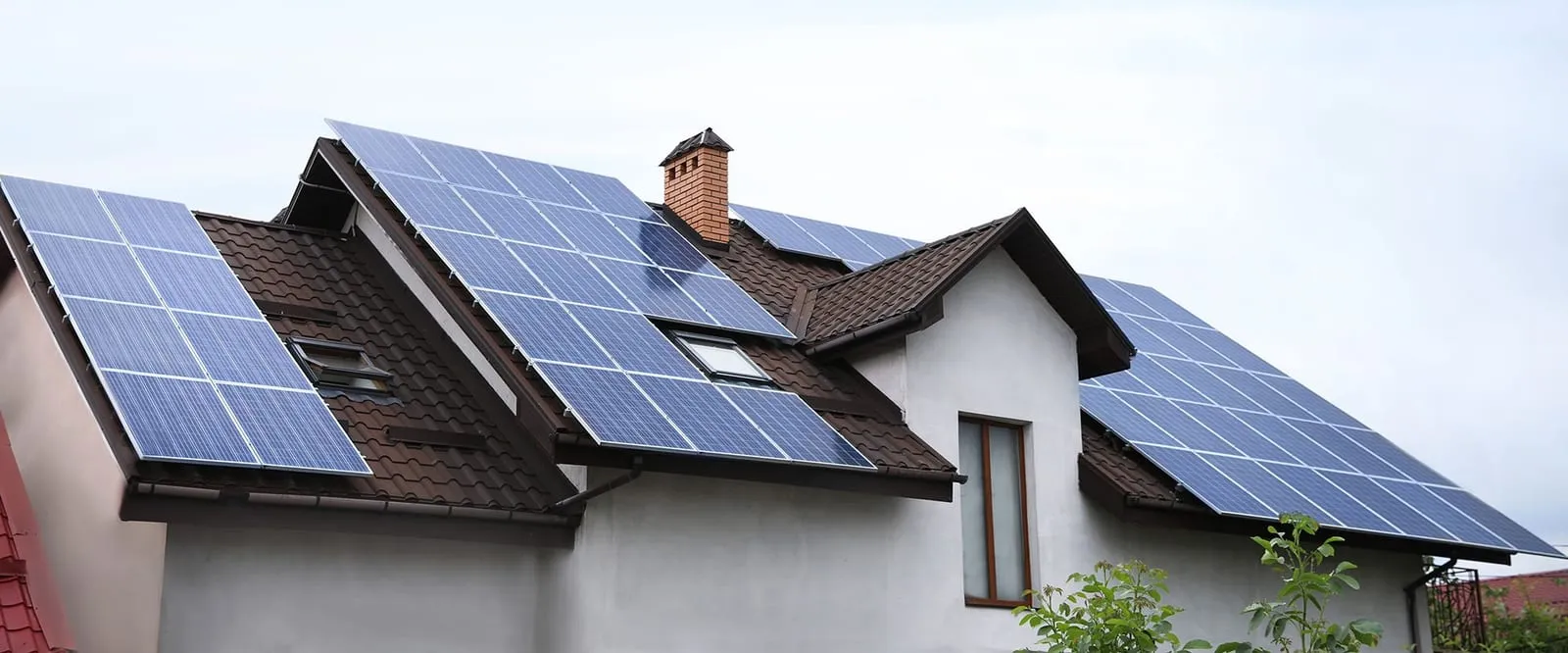
Norwich sits in one of the sunnier corners of the British Isles, and with 144,000 people living in and around a city that’s set itself a genuinely tight net-zero deadline, it’s no surprise more homeowners are asking whether solar finally stacks up on their own roof. This guide sets out what solar actually costs in Norwich right now, how far your money goes against the local property market, what the council is doing that might affect you, and where residents and businesses are turning for installation and upkeep.
How much sun does Norwich actually get?
Norwich sits within the East of England region, which is one of the better-performing parts of the UK for solar generation — expect roughly 970 kWh of electricity per kWp of installed panel capacity per year, noticeably ahead of the UK-wide average and only a shade behind the very best spots in the far south. In practice that means a well-sited, south-facing 4 kWp system in Norwich should generate somewhere around 3,800–3,900 kWh a year — enough to cover a meaningful chunk of an average household’s usage, especially if you shift some of your consumption (washing machine, dishwasher, EV charging) into daylight hours.
Roof orientation and shading still matter more than postcode. A flat or slightly pitched south-east to south-west roof with no chimney stacks or overhanging trees will comfortably beat these averages; a heavily shaded north-facing terrace roof won’t get close, whatever the regional number says.
What solar costs in Norwich, and how it compares to your house price
The average Norwich house price sits around £270,000 — below the England average, which changes the maths on solar slightly: a typical installed system is a smaller percentage of home value here than in London or the South East, which is one reason payback periods in the East of England tend to look reasonably attractive.
Installed costs in 2026 for a standard domestic system, before any of your own quotes come in, generally run:
| System size | Typical installed cost | Approx. annual output in Norwich (970 kWh/kWp) |
|---|---|---|
| 3 kWp | £5,000 | ~2,900 kWh |
| 4 kWp | £6,000–£8,000 | ~3,880 kWh |
| 10 kWp | £13,000–£17,000 | ~9,700 kWh |
| Home battery (e.g. 10–13.5 kWh) | £4,000–£10,500 | — |
Two things currently improve that arithmetic. First, residential solar panels and battery storage are zero-rated for VAT in Great Britain until 31 March 2027, after which the rate is scheduled to return to 5% — so there’s a real, time-limited saving baked into any installation booked in the next year or so. Second, with typical import electricity around 25p/kWh (Ofgem’s price cap moves this figure quarterly) and export rates from suppliers ranging roughly 12–20p/kWh at the top end via the Smart Export Guarantee, a well-designed system in a 970 kWh/kWp region like Norwich is doing real work on both sides of the meter, not just offsetting daytime use.
For a fuller breakdown of national pricing, the cost-of-solar hub’s payback period guide is worth reading alongside any local quotes.
Norwich City Council’s climate targets — what it means for homeowners
Norwich City Council has set a net-zero target for 2030, laid out in the Norwich 2030 Climate Strategy, which is considerably more ambitious than the national 2050 goal. That doesn’t currently translate into a blanket local grant for domestic solar — there isn’t one, nationally or in Norwich specifically — but it does shape a few things worth knowing about.
The council runs (or has run) Solar Together, a community group-buying scheme that pools local demand and runs a reverse-auction process so installers compete on price for a batch of homes rather than quoting each one individually. It’s not unique to Norwich, but it’s the kind of scheme the council’s climate strategy actively promotes, and it’s worth checking whether a current round is open before you go to a single installer for a one-off quote — group-buying tends to shave a meaningful amount off list price purely through volume.
Beyond that, the council’s own framing of its energy transition leans heavily on the city and county’s agricultural and food production hinterland — Norfolk is one of England’s most productive arable and horticultural counties, and that shows up in how much of the local solar conversation (and local generation capacity) sits on farm roofs and land rather than semi-detached houses. More on that below.
If you’re outside the means-tested brackets for ECO4 or Warm Homes (which target low-income, low-EPC households) and you’re not chasing a heat pump — the Boiler Upgrade Scheme’s £7,500 grant is for air source heat pumps and doesn’t apply to solar PV at all — you’re looking at self-funded installation plus the VAT relief as your main lever.
Permitted development: do you need planning permission?
Most Norwich homeowners installing roof-mounted solar panels will fall under permitted development rights and won’t need planning permission at all, provided panels don’t protrude more than 200mm from the roof slope or wall, aren’t higher than the highest part of the roof (excluding the chimney), and are removed or replaced when no longer needed for microgeneration.
The one place to slow down is Norwich’s historic core. The city has a large number of listed buildings and conservation areas — the medieval lanes around the Cathedral Quarter and Norwich Lanes among them — and permitted development rights are typically withdrawn for listed buildings and can be restricted within conservation areas. If your property falls into either category, check with Norwich City Council’s planning department before ordering panels; a retrospective removal notice is a far more expensive outcome than a short delay for approval.
Solar for Norwich’s businesses and industrial estates
The commercial picture in Norwich looks quite different from the domestic one. Local businesses on estates like Hellesdon Park, Vulcan Road, and Norwich Airport Industrial Estate are typically carrying energy bills that run to an average of around £32,000 a year — and for warehouse, light-industrial and distribution occupiers with large flat or shallow-pitch roofs, that’s exactly the profile solar and battery storage were built for.
At that spend level, a correctly sized commercial system paired with battery storage can meaningfully cut daytime grid draw within a few years, particularly for units running shift patterns, cold storage, or process equipment during daylight hours. If you’re weighing this up for a Norwich site, commercial solar costs in Norwich is a useful starting point for realistic local numbers, and business solar in Norwich covers the wider commercial picture for the city. For occupiers specifically on the industrial estates rather than office space, solar built around the needs of industrial units and warehouse-specific solar guidance both address the roof loading, three-phase supply and asset protection questions that a generic domestic quote won’t.
The agricultural angle
Given how much of Norwich’s council-level climate messaging leans on the county’s farming and food production base, it’s worth a specific word for anyone with agricultural land or buildings on the edge of the city. England’s farm-focused support is the Improving Farm Productivity grant, worth roughly 25% of eligible costs — not the Farming Equipment and Technology Fund figure of 40% that gets quoted incorrectly online, and rates differ across the UK’s nations, so check the current scheme terms for your situation rather than relying on a headline percentage. Large barn and outbuilding roofs around Norwich are well suited to solar given the regional yield, and specialist guidance for farm-based solar is a sensible next stop if this applies to you.
Is a battery worth adding in Norwich?
With East of England yield running above the national average, a domestic system in Norwich will often generate a genuine midday surplus even on a modest roof — which is exactly the situation batteries are designed for. Expect £4,000–£8,000 for a typical home battery, or £8,500–£10,500 for something like a 13.5 kWh Tesla Powerwall 3. Whether it pays for itself depends heavily on your usage pattern: households that are out at work all day and home in the evening tend to see the strongest case, since without storage that midday generation is simply exported at a lower rate than you’d pay to buy it back later.
Who installs solar in Norwich and East Anglia
Norwich doesn’t have a huge concentration of large national installers based locally, so most homeowners end up working with regional East Anglian specialists or firms covering the wider county. EC Eco Energy in East Anglia covers commercial and domestic solar and battery installations across Essex and the wider East Anglia region and is worth a call for Norwich and Norfolk properties. If you’re weighing up options a little further afield, Lincolnshire’s MCS-certified team at Greenlinc Renewables covers the eastern counties more broadly, and for ongoing panel cleaning, fault diagnosis and inverter servicing once a system is in, a dedicated national solar maintenance specialist is worth having on speed dial — panels lose very little to age (modern N-type panels degrade around 0.4% a year and are rated for 25–30+ years) but string inverters typically need replacing after 10–15 years, and that’s the part most homeowners forget to budget for.
Whoever you choose, confirm they’re MCS certified before signing anything — it’s a non-negotiable requirement for Smart Export Guarantee eligibility, and reputable local installers will have the certificate ready to show without being asked.
The practical next steps
Get at least three quotes, all from MCS-certified installers, and ask each one to model output using your actual roof pitch and orientation rather than a generic regional average. Check whether a Solar Together round is currently open through the council before committing to an individual quote. If your property is listed or sits inside a conservation area in the city centre, clear the planning question first. And if you’re a business on one of the industrial estates, get a commercial-specific survey rather than a scaled-up domestic quote — roof loading, three-phase capacity and daytime demand profile all change the calculation. For a deeper look at whether the underlying technology holds up in the UK climate at all, our guide to how solar panels perform in Britain and what ongoing maintenance actually involves are both worth reading before you sign anything.
The bottom line for Norwich: better-than-average sun, a council actively pushing towards 2030 net zero, a time-limited 0% VAT window, and a genuinely active local and regional installer base. The main risks are the same ones everywhere — an undersized or badly oriented system, a battery bought on hope rather than usage data, and skipping the MCS check — all of which a proper local survey should catch before you commit.