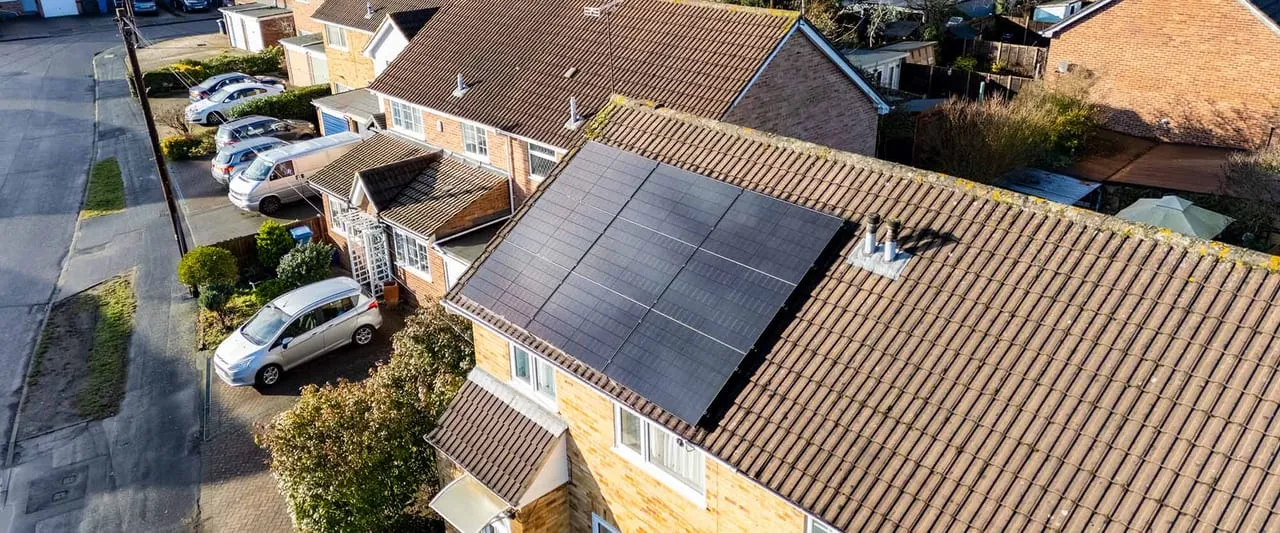
Plymouth doesn’t get talked about much in the national solar conversation, but the fundamentals here are quietly good: a South West sun budget well above the UK average, an average house price under £210,000 that keeps payback periods realistic, and a council with a firm 2030 net-zero target pushing the whole city — homes and industrial estates alike — towards clean power. This guide sets out what solar actually looks like for a Plymouth homeowner in 2026: the real numbers, the planning rules, and where to find people who’ll do the job properly.
Why Plymouth’s climate makes solar worth a proper look
Plymouth sits in the South West region, and that matters more for solar than most people assume. Typical UK solar yield averages around 850 kWh per installed kWp per year, but the South West — including Plymouth — sees closer to 990 kWh/kWp/yr, thanks to a milder, sunnier climate than the Midlands or the North. That’s roughly 15-16% more generation than a system would produce in a less favourable part of the country, for exactly the same outlay.
Run the numbers on a typical 4kW residential system: at 990 kWh/kWp/yr, that’s around 3,960 kWh generated annually. Against an Ofgem-capped import price of roughly 25p/kWh, a household self-consuming even half of that generation is looking at savings in the £450-£550/yr range before export income is added — and Plymouth’s above-average yield pushes that towards the top of the range you’d see quoted nationally. For the full national cost breakdown and a size-by-size calculator, thecostofsolar.co.uk’s UK solar panel cost guide and its solar panel calculator are worth running your own postcode through before you get quotes.
What it actually costs against a Plymouth house price
The average house price in Plymouth sits around £210,000 — below the England average — which changes the maths on solar in a useful way. A typical 4kW system installed in 2026 runs £6,000-£8,000; a smaller 3kW system for a modest terrace or bungalow is closer to £5,000; and a larger 10kW system (increasingly common on bigger detached homes or those adding an EV and heat pump) sits around £13,000-£17,000. Set against a £210,000 property, a mid-size system is roughly 3% of the home’s value — a modest outlay for a home improvement that both cuts bills and, by most agents’ accounts, helps a property show well to buyers who are now actively asking about running costs.
The other number that matters right now is VAT. Residential solar and battery storage installations in Great Britain currently carry 0% VAT, a relief that’s scheduled to run until 31 March 2027 before reverting to 5%. That’s not a discount scheme or a grant — it’s baked into the installer’s quote — but it’s real money, and it’s a genuine reason not to sit on the decision too long if you’re already considering it. For a full breakdown of what determines payback speed — system size, orientation, self-consumption versus export — the payback period guide at thecostofsolar.co.uk walks through the maths in more depth than we can here.
Batteries are the other half of the modern system. A home battery typically costs £4,000-£8,000 installed (roughly £400-£700 per kWh of capacity), with a Tesla Powerwall 3 at 13.5kWh landing around £8,500-£10,500. Batteries aren’t essential — plenty of Plymouth homes do perfectly well on panels alone — but they push self-consumption up significantly, which matters more in a region with strong daytime generation like the South West, where without storage a lot of that midday output would otherwise be exported at a lower rate than it’s worth avoiding on the import side.
Grants, VAT and what’s genuinely available
It’s worth being blunt about this: there is no universal government grant that hands Plymouth homeowners cash towards solar panels in 2026. What exists is narrower. The Boiler Upgrade Scheme’s £7,500 is for air source heat pumps only — it does not fund solar PV, however often that gets conflated online. ECO4 and the Warm Homes scheme are means-tested support aimed at low-income households in low-EPC-rated homes, administered through energy suppliers, not a general public grant. If you’re on Home Energy Scotland’s patch this is different (interest-free loans), but that doesn’t apply south of the border. For Plymouth, the 0% VAT relief described above is, practically speaking, the main financial lever available to most homeowners right now.
Where the picture changes is for local businesses. Plymouth’s inclusion in the Plymouth & South Devon Freeport unlocks Enhanced Capital Allowances for qualifying commercial investment, which materially changes the finance case for solar on business premises — something worth knowing if you run a business from home, let a commercial unit, or simply want context on why you’ll see more solar going up on industrial roofs around the city. If that’s relevant to you, thecostofsolar.co.uk’s breakdown of commercial solar costs in Plymouth sets out the numbers for business-scale systems, and business solar in Plymouth covers the practicalities of commercial installs locally in more detail than this homeowner guide can.
Council policy and what it means for your roof
Plymouth City Council has committed the city to net zero by 2030, set out through the Plymouth Net Zero Action Plan. That’s an aggressive target by UK local authority standards — most councils are working to 2038 or 2050 — and it shapes the planning and energy conversation across the city, from housing retrofit to the commercial estate. For homeowners, the practical planning position on solar is mostly set nationally rather than locally: installing panels on a normal house roof is typically permitted development, meaning no planning application is needed, provided the panels don’t project more than 200mm from the roof slope, don’t exceed the highest part of the roof (excluding chimneys), and the property isn’t listed or within a conservation area. Plymouth, like most historic UK cities, has both — pockets of listed buildings and conservation designations around its older neighbourhoods — so if your home falls into either category, it’s worth a quick check with Plymouth City Council’s planning department before ordering panels, since listed and conservation-area properties can require full planning permission even for roof-mounted solar.
Beyond planning, the council’s net-zero ambition is visible in the commercial and industrial landscape too. Langage Energy Park, on the eastern edge of the city, gives a working example of what commercial-scale solar and energy infrastructure looks like locally — it’s not a residential scheme, but it’s a useful sign of where the city’s energy investment is heading, and it sits alongside industrial areas like Estover Industrial Estate and Coypool where commercial energy costs are a live issue: businesses on those estates report average energy spend around £36,000 a year, which is exactly the kind of bill that makes rooftop solar and Freeport-linked capital allowances worth investigating for local firms. None of that changes what a homeowner needs to do to get panels on a semi in Mannamead or a bungalow in Plympton, but it does explain why solar is becoming a visible part of Plymouth’s built environment well beyond individual houses.
Finding a reliable installer in the South West
MCS certification is non-negotiable — it’s required for Smart Export Guarantee (SEG) eligibility, and it’s the baseline standard that separates a properly designed, warranted install from a cowboy job. The Smart Export Guarantee itself pays for electricity you export back to the grid, but rates are set by individual suppliers rather than the government, and vary widely — roughly 12-20p/kWh at the better end, so it’s genuinely worth comparing SEG tariffs rather than accepting whatever your existing supplier offers by default.
For homeowners in Plymouth and the wider South West, CCS Heating & Renewables in the South West is a Cornwall-based specialist in solar and renewable heating that covers the regional patch, and is worth a call alongside any local quotes you gather. If you’re weighing up a commercial-scale system for a business premises rather than a house, D&R Energy works on commercial solar out of Bristol and understands the South West grid and planning environment. Whoever you choose, get at least three MCS-certified quotes, ask to see recent local installs, and check the inverter and panel warranties carefully — modern N-type panels (TOPCon, HJT or ABC cell technology) now degrade at only around 0.4% a year and are commonly warranted for 25-30 years, while string inverters typically need replacing once in that lifespan, at a cost of roughly £500-£1,000.
It’s also worth knowing that 2025 was a record year for UK solar: 257,397 MCS-certified installations went in nationally, up 32% on the year before, taking total UK deployed capacity to around 21.6 GW — roughly 6.4% of the country’s electricity. Plymouth’s above-average yield means the city is well placed to keep being part of that growth. If you want a wider sense of how the technology and market are moving before you commit, thebritishsolarblog’s guide to how solar panels actually perform in the UK climate and our rundown of the best solar panels available in 2026 are both worth reading alongside any quotes.
Living with solar: farms, agriculture and maintenance nearby
Plymouth sits at the edge of a wider agricultural hinterland across Devon, and it’s worth flagging that farm and smallholding solar follows a different set of rules and grants to domestic installs — in England, that’s the Improving Farm Productivity grant, covering around 25% of eligible costs rather than the older FETF scheme figures still floating around online. If that’s relevant to your situation, solarpanelsforfarms.uk covers the agricultural side in more depth than a homeowner guide should attempt to.
Once panels are up, they’re genuinely low-maintenance — no moving parts, and modern systems are built to shrug off Plymouth’s coastal weather — but an annual visual check and an inverter check every few years is sensible, particularly given how much salt-laden wind the city gets off Plymouth Sound. Our own guide to solar panel maintenance in the UK covers what’s actually worth doing yourself versus calling someone in for.
The practical next step
If you’re a Plymouth homeowner weighing this up in 2026, the sensible order of operations is: check whether your property is listed or in a conservation area (a five-minute call to the council), get your roof assessed for orientation and shading, gather at least three MCS-certified quotes from installers who know the South West’s weather and grid conditions, and lock in your decision before the 0% VAT relief steps back up to 5% in April 2027. With yield running around 15% above the national average and house prices still comparatively affordable, Plymouth is one of the better places in England to be making this decision right now — the numbers simply work harder here than they do further north.