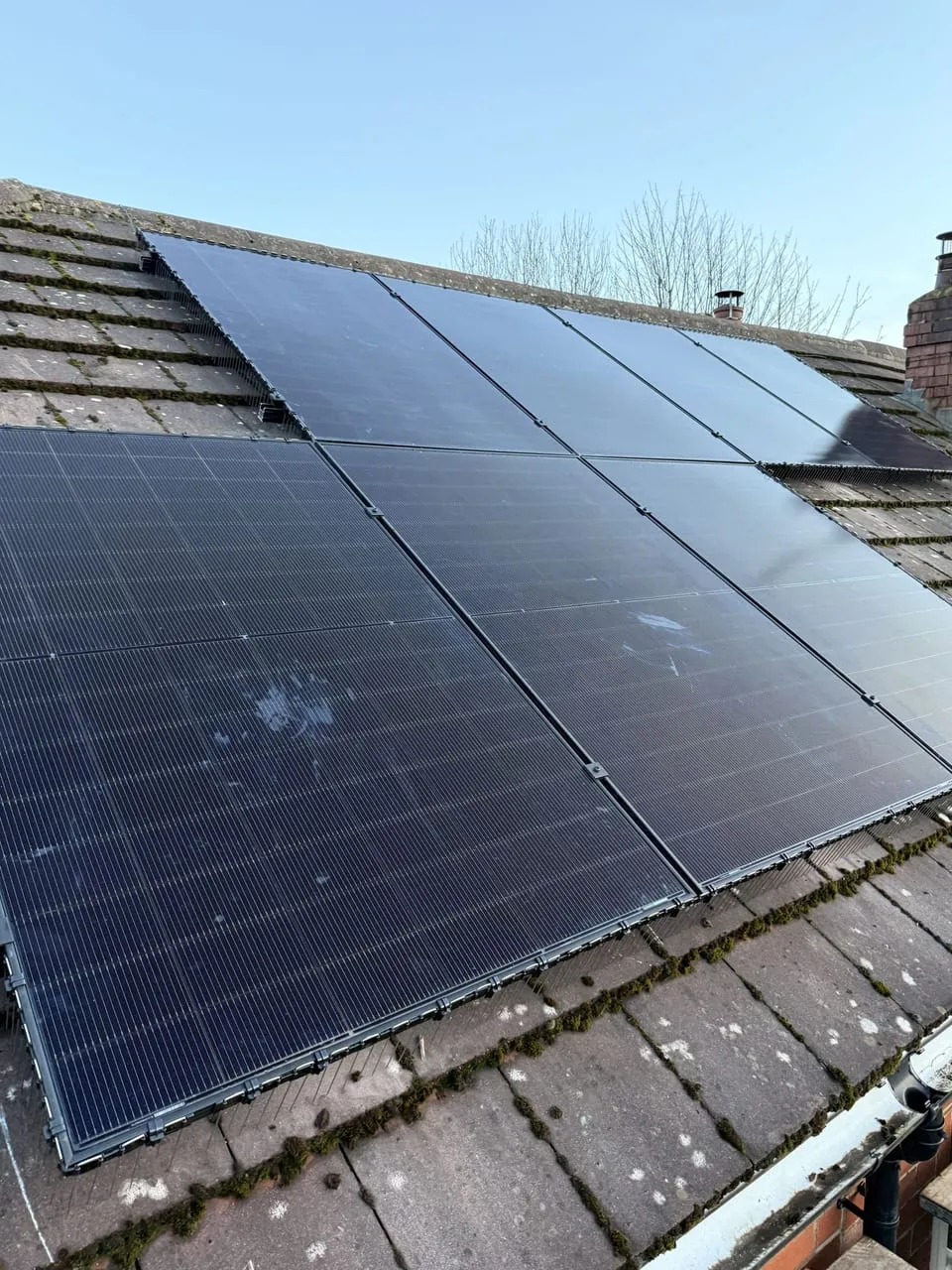
Southampton sits in one of the sunniest corners of the country, has a housing stock that’s genuinely affordable by national standards, and a council with a hard 2030 net-zero deadline on the wall. Put those three things together and you’d expect solar uptake to be running well ahead of the UK average — yet plenty of homeowners here still aren’t sure what a system actually costs in 2026, whether the council will wave it through, or who to trust to fit it. This guide sticks to what’s true for the city, not generic national boilerplate.
Southampton’s solar yield: better than you’d think
Southampton sits in the South East solar band, where typical yields run around 1,000 kWh per installed kWp per year — noticeably ahead of the UK-wide average of roughly 850 kWh/kWp. That’s the difference between a system that pays for itself in the low end of the national range and one that’s genuinely quick. A well-sited 4kWp roof array in the city should produce somewhere in the region of 3,800–4,200 kWh a year, depending on roof pitch, orientation and shading from neighbouring terraces (a real factor in parts of the older housing stock around the city centre and Shirley).
For context, the country logged a record 257,397 MCS-certified installs in 2025 (up 32% on the year before), taking cumulative UK solar capacity to around 21.6 GW — roughly 6.4% of the electricity Britain uses. Southampton, with a population of 269,781 and a housing mix from Victorian terraces to 1930s semis and newer estates, is a decent microcosm of that national wave rather than an outlier.
What a home solar system actually costs here in 2026
Solar and battery storage for homes is still zero-rated for VAT across Great Britain — that 0% rate runs until 31 March 2027, after which it’s scheduled to revert to 5%, so there’s a genuine, time-limited saving on the table right now rather than an indefinite one.
| System size | Typical installed cost (2026) | Approx. annual generation in Southampton (~1,000 kWh/kWp) |
|---|---|---|
| 3 kWp | ~£5,000 | ~2,900–3,100 kWh |
| 4 kWp | £6,000–£8,000 | ~3,800–4,200 kWh |
| 10 kWp | £13,000–£17,000 | ~9,500–10,500 kWh |
| Battery (adds on) | £4,000–£8,000 (~£400–£700/kWh) | — |
| Tesla Powerwall 3 (13.5kWh) | ~£8,500–£10,500 | — |
Worth sense-checking against the local property market: the average Southampton house price sits around £240,000, which means a typical 4kW system represents roughly 2.5–3.3% of the value of the average home — a modest outlay against decades of falling electricity bills. Modern N-type panels (TOPCon, HJT, ABC) degrade at only around 0.4% a year and are rated for 25–30+ years of service, though string inverters typically need replacing once, at around 10–15 years, for £500–£1,000.
On the economics: with grid import running around 25p/kWh under the Ofgem price cap and Smart Export Guarantee rates varying by supplier — up to roughly 12–20p/kWh at the better end, never a fixed national rate — the case for self-consuming as much generation as possible (ideally with a battery) is stronger than exporting everything. If you want the full breakdown of how battery costs stack up against savings, thecostofsolar.co.uk’s guide to battery storage costs is worth reading before you get quotes, as is its solar panel calculator for running your own roof numbers rather than relying on an installer’s headline figure.
Council policy: what Southampton City Council actually wants
Southampton City Council has committed to a net-zero target of 2030 — one of the more aggressive timelines of any UK city — under its Green City Charter framework. That’s a genuine driver of local demand: a council chasing a 2030 deadline has every incentive to be pragmatic about domestic and commercial solar applications rather than throwing up obstacles.
For most houses, rooftop solar doesn’t need planning permission at all. Under permitted development rights (which apply nationally, not just in Southampton), solar panels on a house are normally fine as long as they don’t project more than 200mm from the roof slope or wall, are removed or reused when no longer needed, and — if you’re in a conservation area or on a listed building — don’t face a road-facing elevation without extra consent. Southampton has pockets of conservation-area housing (parts of Bedford Place and the older streets around the city centre and Portswood among them), so it’s worth a five-minute check with the council’s planning portal before signing a contract if your street falls into one of those. For everyone else, it’s a straightforward install.
The bigger story: Southampton’s commercial solar boom
What’s genuinely distinctive about Southampton isn’t the domestic market — it’s what’s happening around it. The city’s port drives a huge amount of freight, warehousing and logistics activity, and that’s translating directly into commercial solar demand at scale. Southampton falls within the Solent Freeport, which unlocks Enhanced Capital Allowances for qualifying businesses investing in plant and machinery — solar and battery assets among them — on top of the usual commercial payback case.
Local industrial estates including Eastleigh Lakeside, Empress Road and Solent Industrial Estate are exactly the kind of large-roof, high-daytime-load sites where commercial solar tends to make the strongest financial sense, and with average commercial energy spend in the area running around £42,000 a year, the appetite for cutting that bill is obvious. If you run a business on one of those estates, or anywhere near the port corridor, it’s worth reading a dedicated breakdown of commercial solar costs in Southampton before approaching installers, and looking at what business solar in Southampton actually involves in terms of system sizing and payback for local site types. For the finance side of a commercial project — particularly relevant given the Freeport’s capital allowances — commercial solar finance options are worth understanding before you commit capital, and commercialsolarpanelsinstallation.co.uk is a useful starting point for the broader installation process on larger commercial roofs. Warehousing and distribution operators in particular should look at what’s realistic for solar on industrial units of the kind found along the Solent’s logistics corridors.
Who actually installs solar in Southampton
MCS certification is non-negotiable — it’s a legal requirement for Smart Export Guarantee eligibility, and it’s the baseline check for competent workmanship and correctly-specified kit. Beyond that, the value of a local or regional installer is that they know Southampton’s roof stock, its conservation-area pockets, and its DNO connection quirks around the port and industrial estates, rather than working from a national template.
South Coast Solar Solutions is a natural first call for homeowners along the south coast corridor that includes Southampton, and Solent Solar, based across the water in Hampshire, is another regional option worth getting a quote from — comparing at least two or three MCS-certified local installers rather than accepting the first quote is the single best piece of consumer advice for any solar project. Once a system is installed, don’t treat it as fit-and-forget: inverters, isolators and panel connections benefit from periodic checks, and solarmaintenancesolutions.com specialises specifically in solar operations and maintenance if your original installer doesn’t offer an aftercare package.
Grants and funding: the honest picture
There’s no universal grant for home solar in England, in Southampton or anywhere else — that’s a persistent myth worth killing early. What actually exists is narrower and means-tested: ECO4 and the Warm Homes scheme support low-income households in low-EPC-rated homes with a range of energy efficiency measures, and eligibility depends on benefits status and your home’s current EPC band rather than simply wanting solar panels. The Boiler Upgrade Scheme’s £7,500 is for air source heat pumps, not solar PV — a common point of confusion. What genuinely applies to most Southampton homeowners right now is the 0% VAT window on solar and battery installation, running until the end of March 2027, which functions as a straightforward, time-limited discount rather than a grant you need to apply for.
For businesses, the picture is different and arguably more generous given the Freeport status: the Enhanced Capital Allowances available through Solent Freeport designation sit alongside standard capital allowances, making the finance case for larger commercial arrays on the city’s industrial estates stronger than in most other UK ports right now.
Getting your own numbers right
Before getting quotes, it’s worth understanding what a well-specified system should actually cost and generate, rather than negotiating from a position of not knowing. thecostofsolar.co.uk’s UK cost guide and its payback period calculator are both useful reference points, and our own guide to how solar panels actually perform in the UK climate is worth reading if you’re weighing up whether a south coast roof is worth the investment versus the national picture. If you’re at the stage of comparing hardware, our best solar panels in the UK roundup and separate solar panel maintenance guide cover what to ask installers about warranties and upkeep before you sign anything.
Southampton’s combination of above-average yield, sub-national-average house prices, a council chasing a genuinely ambitious 2030 deadline, and a commercial market being pulled along by Freeport incentives and port logistics makes it one of the more straightforward UK cities to make the numbers work in — provided you get quotes from more than one MCS-certified installer and go in with realistic expectations about what grants do and don’t cover.