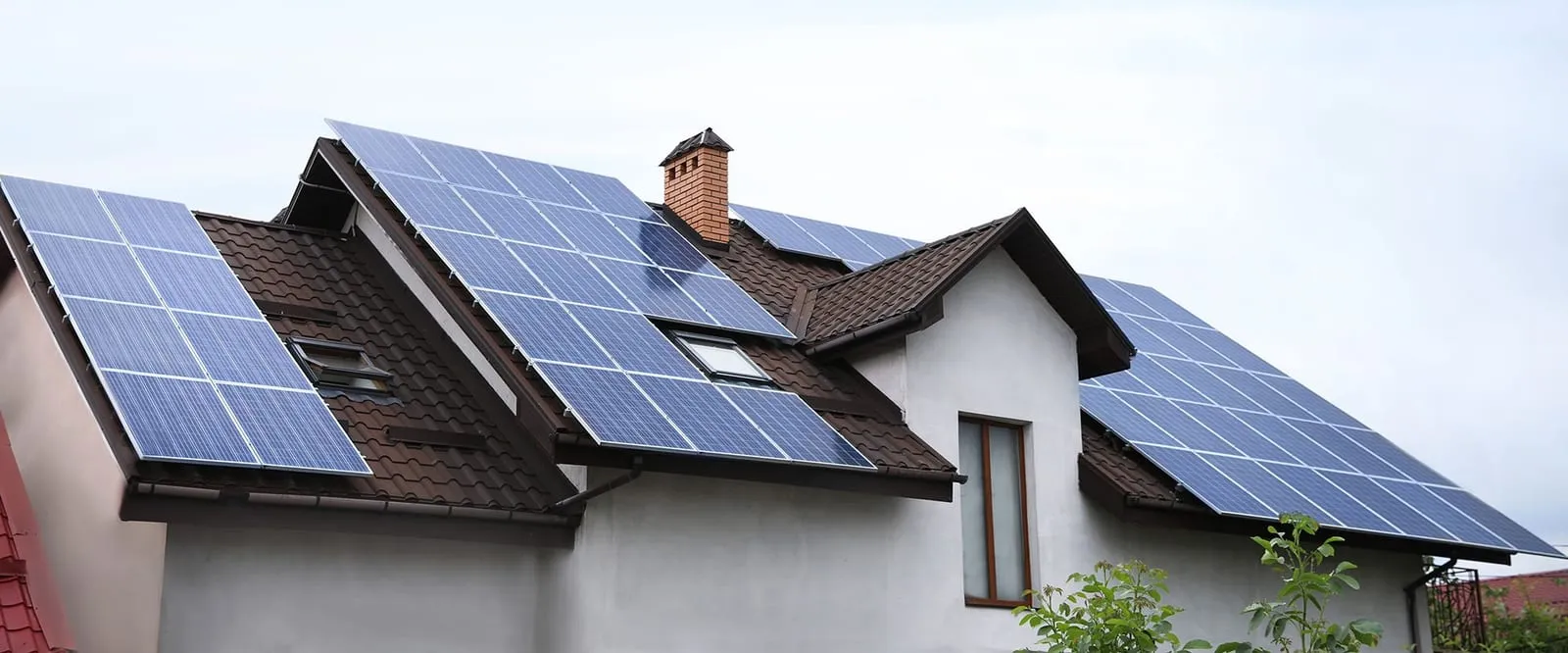
Stoke-on-Trent doesn’t get talked about much in the national solar conversation — it’s not the sunny south coast, and it’s not one of the big EMD-friendly commuter belts either. It’s the Six Towns: Hanley, Burslem, Tunstall, Longton, Fenton and Stoke, home to 256,127 people and a pottery industry that’s been firing kilns since before anyone here had heard of a kilowatt. With an average house price of around £165,000 — comfortably below the England average — and a housing stock that’s a genuine mix of Victorian terraces, 1930s semis and newer estates around the edges, the question locals actually ask isn’t “does solar work here?” but “does it work on my roof, at my budget?” Here’s an honest answer.
How much sun does a Stoke-on-Trent roof actually get?
Stoke sits in the West Midlands solar belt, and the region’s typical yield is around 920 kWh per kWp per year. That’s a middling figure by UK standards — well ahead of Scotland and the north-east, a touch behind the sunniest parts of Cornwall and Kent (which can push past 1,050 kWh/kWp/yr), and roughly on par with most of the Midlands and the north-west.
In practical terms, a standard 4kW residential system on a reasonably unshaded, south-facing Stoke roof should generate somewhere in the region of 3,600–3,700 kWh a year. On an east-west roof (common on the terraced streets around Fenton and Longton) you’ll lose some of that peak generation but pick up a flatter output across the day — often a better match for a household that’s out at work and home again by early evening. It’s not the most dramatic solar climate in Britain, but it’s a genuinely workable one, and the guides at thebritishsolarblog.co.uk on whether solar panels actually work in the UK go into the physics of why a “grey sky” region like this still generates a useful amount of power for most of the year.
What panels actually cost against a £165k Stoke home
Against a typical £165,000 Stoke-on-Trent house price, a solar installation is a meaningful but not outlandish outlay. For 2026, expect roughly:
- A 3kW system (typical for a smaller terrace) — around £5,000 installed
- A 4kW system (the most common choice for a three-bed semi) — £6,000–£8,000 installed
- A larger 10kW system, more relevant to bigger detached properties or those planning an EV and a heat pump too — £13,000–£17,000
The one piece of timing that genuinely matters right now: residential solar and battery storage still carry 0% VAT in Great Britain, but that’s scheduled to revert to 5% from 1 April 2027. If you’re weighing up a Stoke installation for this year or next, that’s a real saving locked in while it lasts, not marketing spin.
On the running-cost side, most Stoke households are paying somewhere around 25p/kWh for grid electricity under the Ofgem price cap, and any surplus you export back to the grid is paid under the Smart Export Guarantee — rates vary supplier to supplier, typically 12–20p/kWh at the better end, so it pays to shop around once your system’s MCS-certified and registered. For a proper breakdown of what different system sizes cost and how long they take to pay back, thecostofsolar.co.uk’s guide to UK solar panel costs and its payback period calculator are worth running your own numbers through before you get quotes.
There’s no universal grant for home solar in England — that’s worth being upfront about. If you’re on a low income and a low-EPC-rated home you may qualify for support through ECO4 or the Warm Homes scheme, and it’s worth noting the Boiler Upgrade Scheme’s £7,500 only applies to air source heat pumps, not solar PV, so don’t go into a quote expecting it to cover panels.
Permitted development, and Stoke’s heritage streets
Most roof-mounted solar in Stoke-on-Trent falls under permitted development rights, meaning you generally don’t need planning permission provided the panels don’t protrude excessively from the roofline and the property isn’t listed. Where it gets more involved is the city’s pottery heritage: pockets of Stoke — around Middleport, parts of Burslem and areas near the historic bottle kilns — sit within conservation areas or contain listed buildings, and both can change the rules on what you can fit and where. If your home is anywhere near one of the city’s protected industrial or Victorian terraces, it’s worth a quick check with Stoke-on-Trent City Council’s planning team before committing, rather than finding out after the scaffolding’s up.
What the council actually says about solar
Stoke-on-Trent City Council has a net-zero target of 2050, set out through its Climate Change Action Plan, and the framing locally leans heavily on the city’s industrial identity rather than generic green messaging. The heritage ceramics industry — still a genuine employer and identity marker for the Six Towns — is pushed as a driver for industrial decarbonisation interest rather than a barrier to it, and the council’s Etruria Valley Enterprise Zone exists specifically to support business expansion in the city, solar and renewables among the investments that fit that brief. For a city that’s spent two centuries firing kilns, there’s an obvious logic in pairing that industrial base with rooftop generation rather than treating solar as something that only belongs on suburban semis.
The commercial angle: Festival Park, Trentham Lakes and Park Hall
This is where Stoke’s numbers get genuinely interesting. The city’s three main industrial and business estates — Festival Park, Trentham Lakes and Park Hall — house a mix of manufacturing, logistics and retail units, and the average commercial energy spend across Stoke businesses sits at around £38,000 a year. That’s a serious ongoing cost, and it’s exactly the kind of spend that a well-sized commercial solar array on a warehouse or factory roof can meaningfully cut into, particularly with commercial installed costs running around £900–£1,200 per kWp rather than the higher per-kWp cost of small domestic systems.
If you’re running a business on one of these estates, or anywhere else in the city, it’s worth reading a dedicated breakdown of commercial solar costs in Stoke-on-Trent before requesting quotes, and the business solar in Stoke-on-Trent location page is a sensible next stop for scoping what a commercial system might look like on your specific roof. For manufacturing and ceramics-adjacent premises specifically, solarpanelsforfactories.co.uk covers the kind of industrial-unit considerations — three-phase supply, roof loading on older kiln-era buildings, load profiles that run through the working day — that a generic residential quote won’t touch. Logistics and storage operators on Trentham Lakes or Park Hall are better served by solarpanelsforwarehouses.co.uk, which deals with the large flat-roof arrays and higher daytime consumption typical of distribution units, while commercialsolarpanelsinstallation.co.uk is a reasonable general starting point if you’re not yet sure which category your premises falls into. Estates with large surface car parks — not uncommon around Festival Park’s retail units — are also increasingly looking at solar car park canopies as a way of generating without giving up any usable roof or ground space at all.
Batteries, maintenance, and who actually installs here
A home battery adds roughly £4,000–£8,000 to a Stoke installation depending on capacity, with a Tesla Powerwall 3 (13.5kWh) sitting at the premium end around £8,500–£10,500 installed. Given the West Midlands yield profile — decent but not exceptional — a battery tends to earn its keep by letting you use more of what you generate on-site rather than exporting it cheaply and buying it back at a higher rate in the evening, which matters more here than it would in a region with a much higher generation surplus.
Nationally, 2025 was a record year for UK solar: 257,397 MCS-certified installations went in (up 32% on the year before), taking cumulative UK deployment to around 21.6 GW and roughly 6.4% of the country’s electricity. That scale matters for Stoke homeowners in a practical sense — there’s a mature, competitive installer market to choose from, and MCS certification (a non-negotiable if you want to claim the Smart Export Guarantee) is now the baseline rather than the exception. Midland Solar covers Birmingham and the wider West Midlands, including Stoke-on-Trent, and is a sensible local starting point for both domestic and small commercial quotes given the regional footprint. Premier Electrical Renewables is another installer worth getting a quote from if you’re weighing up solar alongside battery storage or an EV charger as part of the same project, rather than as separate purchases down the line.
Whoever you choose, don’t skip ongoing maintenance once the system’s in. Modern N-type panels degrade slowly — around 0.4% a year — and are rated for 25–30 years or more, but string inverters typically last 10–15 years and cost £500–£1,000 to replace, so it’s worth budgeting for that rather than being caught out. For system health checks and repairs after the initial install, solarmaintenancesolutions.com specialises specifically in solar operations and maintenance rather than new installs, and thebritishsolarblog.co.uk’s own maintenance guide covers the basics of what a decent annual check should actually involve.
The bottom line for Stoke-on-Trent homeowners
Stoke isn’t a solar hotspot and nobody selling you a system honestly should pretend it is. But at 920 kWh/kWp/yr it’s a solid, workable yield, house prices here mean the upfront cost is a proportionally bigger commitment than in the south-east — which makes getting multiple MCS-certified quotes and understanding your actual roof orientation more important, not less. With 0% VAT still running until March 2027, a council actively framing solar as part of the city’s industrial future rather than a lifestyle add-on, and a genuine cluster of commercial opportunity around Festival Park, Trentham Lakes and Park Hall, the case for at least getting a proper site survey — domestic or commercial — is a reasonable one for most Stoke-on-Trent roofs.