If you’ve spent any time comparing solar batteries this year, you’ll have noticed the market has quietly matured. It’s no longer just Tesla and a handful of German imports — GivEnergy, Fox ESS, Sunsynk and Sigenergy have all built serious UK installer networks, and the price-per-kWh gap between them has narrowed. What hasn’t narrowed is the gap in warranty terms, app quality and genuine backup capability, and that’s where most buying decisions actually go wrong.
This is an independent comparison. We don’t sell batteries, we’re not paid by any manufacturer, and there’s no affiliate link anywhere on this page. The rankings below are based on published specs, typical UK installed pricing as quoted by installers in 2026, and warranty documentation — not marketing copy.
How we’re ranking these
Four things matter when you’re actually living with a battery, not just reading its datasheet:
- £ per usable kWh installed — the real cost once you include labour, not just the cell price
- Warranty — years and throughput guarantee, because a battery that dies at year 8 has cost you more than one that runs 15
- App and monitoring — whether you can actually see and control what it’s doing, and whether it plays nicely with your tariff
- Backup power — whole-home vs partial, and how seamless the changeover is during a cut
A word on price: installed cost depends heavily on your inverter setup (AC-coupled retrofit vs DC-coupled with a hybrid inverter), scaffolding, consumer unit work and regional labour rates. Treat every figure below as a range, not a quote, and always get 2-3 like-for-like quotes from MCS-certified installers before committing.
The rankings
| Brand | Typical installed £/kWh (usable) | Warranty | App | Backup | Best for |
|---|---|---|---|---|---|
| GivEnergy | ~£450-£600/kWh | 10 yr (some ranges 12-15 yr) | Strong, UK-built | Full-home EPS on hybrid models | Value + UK support |
| Sunsynk | ~£400-£550/kWh | 10 yr | Good, improving fast | Full-home on hybrid | Budget-conscious, larger arrays |
| Fox ESS | ~£450-£600/kWh | 10 yr | Solid, occasional lag | Full-home EPS | All-rounder, wide installer base |
| Sigenergy | ~£550-£750/kWh | 10 yr (modular) | Excellent, unified with EV/heat pump | Full-home, fast changeover | Tech-forward, future EV/HP integration |
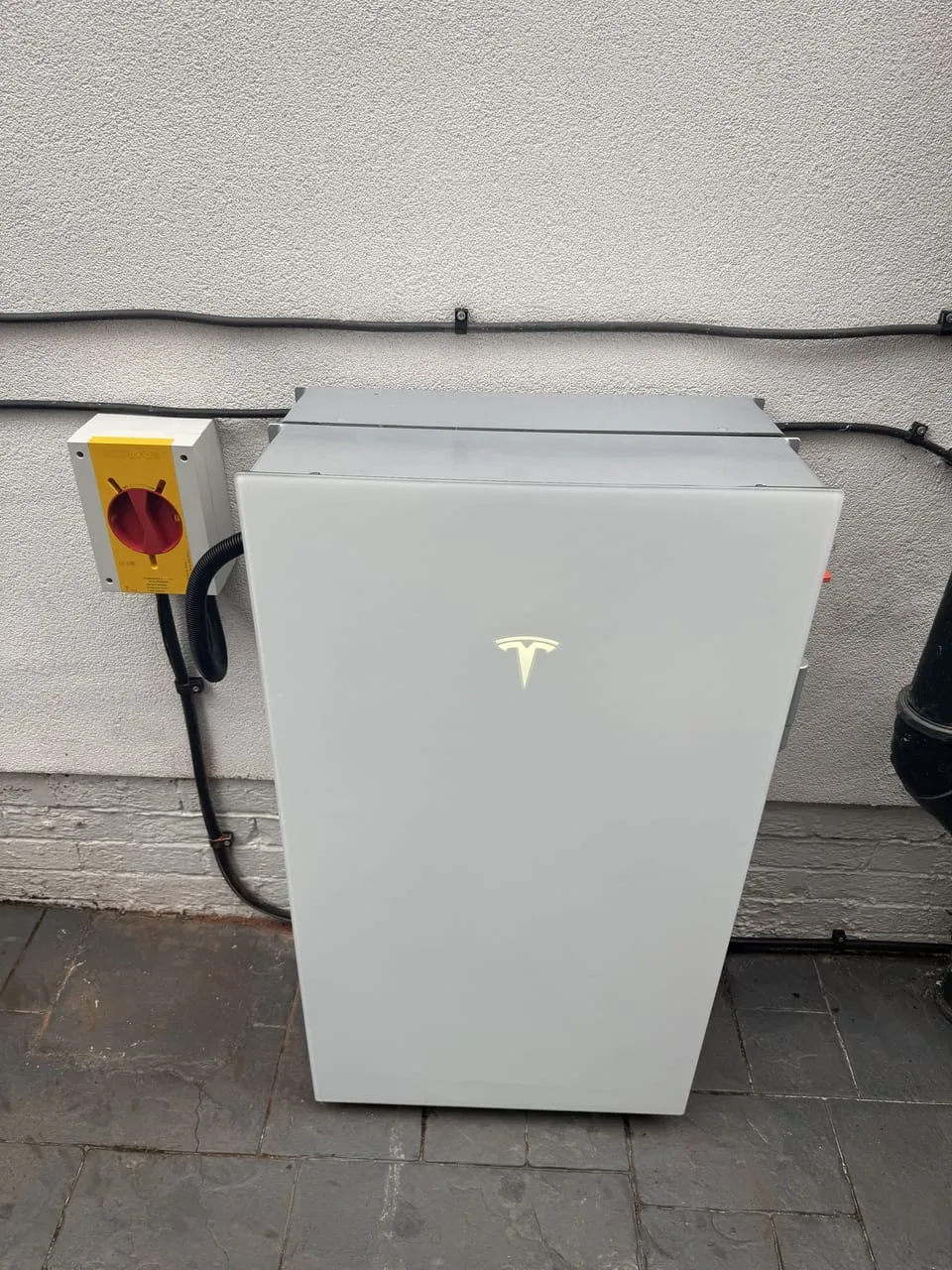
| Tesla Powerwall 3 | ~£630-£780/kWh | 10 yr, 70% capacity guaranteed | Best-in-class simplicity | Full-home, near-seamless | Plug-and-play, minimal fuss |
Prices assume a single unit in the 10-13.5kWh range supplied and fitted; smaller single-battery add-ons (e.g. a 5kWh AC-coupled retrofit) often carry a higher £/kWh because installation labour doesn’t scale down proportionally.
GivEnergy — best value with genuine UK backing
GivEnergy has become the default recommendation for a lot of installers, and it’s easy to see why. The hardware is competitively priced, the company is UK-headquartered (support calls don’t route through a time zone six hours away), and the All in One and Gemini ranges now cover most household sizes from 5.2kWh up to stackable 25kWh-plus setups. The GivEnergy app is one of the better ones for tariff-following — if you’re on a time-of-use import tariff, it will charge the battery in the cheap window and hold charge back for peak pricing without much manual fiddling.
Where it loses marks: the standard warranty sits at 10 years on most models, which is competitive but not class-leading, and full whole-home backup depends on having a compatible hybrid inverter and EPS (Emergency Power Supply) box wired in at install time — retrofitting it later is possible but adds cost. If you want a battery from a company that answers the phone in the same accent as your installer, this is hard to beat on price.
Installers across our network are seeing this borne out in real bookings — Ecoaim in Livingston and YEERS in Yorkshire both report GivEnergy as their most-requested brand for retrofits onto existing solar arrays, largely because of the AC-coupled flexibility.
Sunsynk — the value leader if you’re building a bigger system
Sunsynk has carved out a reputation as the cheapest route to a large battery bank, particularly for households or smallholdings wanting 15kWh-plus of storage. The hardware is reliable, the 10-year warranty is standard for the category, and the hybrid inverters are well regarded by installers for their solar utilisation figures. The app has historically lagged GivEnergy’s for polish, though recent updates have closed that gap noticeably.
The catch is installer availability — Sunsynk’s network, while growing fast, is still thinner in some regions than GivEnergy’s or Fox’s, so get a couple of quotes to check lead times before assuming it’s available near you. For sheer £/kWh at scale, though, it’s consistently one of the cheapest ways to get serious storage capacity installed.
Fox ESS — the safe, well-supported all-rounder
Fox ESS sits in almost exactly the same price and warranty bracket as GivEnergy, and for most households the choice between the two comes down to which your local installer prefers to fit and support. Fox’s hybrid inverters are dependable, the EPS switchover for backup works well, and the H3 Pro range in particular has a good reputation for handling larger PV arrays without curtailment. The app is solid rather than spectacular — functional monitoring, decent historical data, occasional slowness on the mobile version that GivEnergy’s app doesn’t suffer as much.
If your installer already fits a lot of Fox kit, there’s real value in going with what they know well — a battery that’s correctly commissioned and understood by the installer’s aftercare team beats a marginally cheaper unit nobody locally is confident servicing. Premier Electrical Renewables and Solent Solar both quote Fox ESS regularly alongside GivEnergy for exactly this reason — stock availability and installer familiarity, not just spec sheets, decide a lot of real-world outcomes.
Sigenergy — the one to watch if you’re thinking EV and heat pump too
Sigenergy is the newest serious entrant here and it’s aimed squarely at households planning to add an EV charger or heat pump alongside solar, not just a battery in isolation. Its SigenStor modular system unifies solar, battery, EV charging and (increasingly) heat pump control under one app and one piece of hardware — which is genuinely useful if you’re trying to avoid three separate apps and three separate companies to call when something goes wrong.
The trade-off is price: Sigenergy tends to sit £100-£150/kWh above GivEnergy or Sunsynk on a like-for-like install, and the installer base, while expanding quickly through 2026, is still smaller than the established players. The 10-year warranty is standard for the category and the modular design means you can add capacity later without replacing the whole unit, which is a genuine long-term advantage if your energy use is likely to grow (an EV purchase or a heat pump swap being the obvious triggers). For anyone who has read our heat pump grants coverage and is planning a fuller electrification of the home, Sigenergy’s unified approach is worth the premium for some households — for a solar-and-battery-only install, it’s harder to justify over the cheaper alternatives.
Tesla Powerwall 3 — the simplest, if you can stomach the price
The Powerwall 3 remains the battery most non-technical buyers have actually heard of, and there’s a reason for that: it’s genuinely the easiest system to live with. Integrated inverter, integrated MPPTs, one app, one company, minimal installer variance in how it’s commissioned. The 10-year warranty with a 70% capacity guarantee at the end of that period is clearly stated and consistently honoured, and backup switchover is about as seamless as anything on this list.
It’s also the most expensive per kWh of the five, sometimes by a meaningful margin once you’re comparing a full 13.5kWh unit against a similarly sized GivEnergy or Sunsynk stack. If budget is the primary constraint, it’s hard to recommend the Powerwall 3 as the value pick. If simplicity, brand recognition and a single point of accountability matter more to you than squeezing the last pound out of the install, it remains a strong, low-drama choice.
What actually changes the “best” answer for your home
None of this is “best” in the abstract — it’s best for a use case. A few things that should shift your decision more than brand loyalty:
Your inverter situation. Retrofitting a battery onto an existing solar array via AC coupling is a different job (and often a different best-fit brand) than installing battery and solar together with a single DC-coupled hybrid inverter. Get quotes for both approaches if you’re not sure which fits your roof.
Your tariff. If you’re on or planning to move to a time-of-use tariff with a cheap overnight rate, the software matters as much as the hardware — a battery that charges reliably in the cheap window and discharges through peak pricing pays for itself faster than raw kWh capacity alone would suggest. Check our solar battery storage costs breakdown for how payback periods actually shift with tariff arbitrage factored in.
Backup vs no backup. Full whole-home Emergency Power Supply typically adds cost and requires specific inverter/battery pairings decided at install time — it’s not something you can bolt on cheaply afterwards if you skip it now and change your mind after the next power cut.
Installer relationship, not just spec sheet. A battery correctly sized, commissioned and monitored by an installer who knows the brand well will outperform a “better” battery installed by someone fitting it for the first time. Installers such as ElectriFusion Solutions in South Yorkshire, FLD Electrical in Swansea and Hazell Electrical in West Kent each tend to have a preferred one or two brands they fit most often — ask what they’re most confident servicing locally, not just what’s cheapest on paper.
On grants, VAT and the numbers that actually affect your bill
There’s no dedicated grant for home battery storage in England, and no scheme currently pays you to add one — don’t let anyone tell you otherwise. What does help: solar and battery storage both currently carry 0% VAT in Great Britain until 31 March 2027, which is a genuine ~20% saving baked into every quote you get before that date. After that, VAT is scheduled to revert to 5% — still low, but worth factoring in if you’re weighing up timing.
If you’re in Scotland, Home Energy Scotland offers interest-free loans that can be used toward battery storage alongside solar, which is worth checking before assuming you’re paying the full amount upfront — Ecoaim and Greenlinc Renewables both deal with this routinely for Scottish and Lincolnshire customers respectively and can talk you through eligibility.
On export: the Smart Export Guarantee is not a single fixed rate — it varies by supplier, and top-end tariffs currently sit somewhere around 12-20p/kWh, with plenty of suppliers paying less. MCS certification (which all five batteries above achieve when installed correctly) is a prerequisite for SEG eligibility, so don’t let anyone install an uncertified system and assume you’ll still get paid for export — you won’t.
The honest bottom line
If you want the cheapest genuinely reliable route to meaningful storage capacity, Sunsynk or GivEnergy will get you there. If your installer has a strong preference and track record with Fox ESS, don’t fight it for the sake of a spec-sheet difference — installer competence matters more than brand in year one. If you’re already planning an EV or heat pump within the next few years, Sigenergy’s unified approach is worth the premium. And if you simply want the least complicated ownership experience and don’t mind paying for it, the Powerwall 3 remains exactly that.
Whatever you choose, get it sized properly against your actual usage pattern, not a generic “average household” assumption — a battery that’s too small for your evening peak load undersells itself daily, and one that’s oversized for a modest household just inflates the bill for capacity you rarely draw down. For the underlying maths on how battery size interacts with payback, our solar panel payback period piece and do solar panels work in the UK guide are both good next reads before you sign anything.
For the money side — including the Expansion pack and what installation itself costs — see the full breakdown of the Tesla Powerwall 3 cost in the UK.