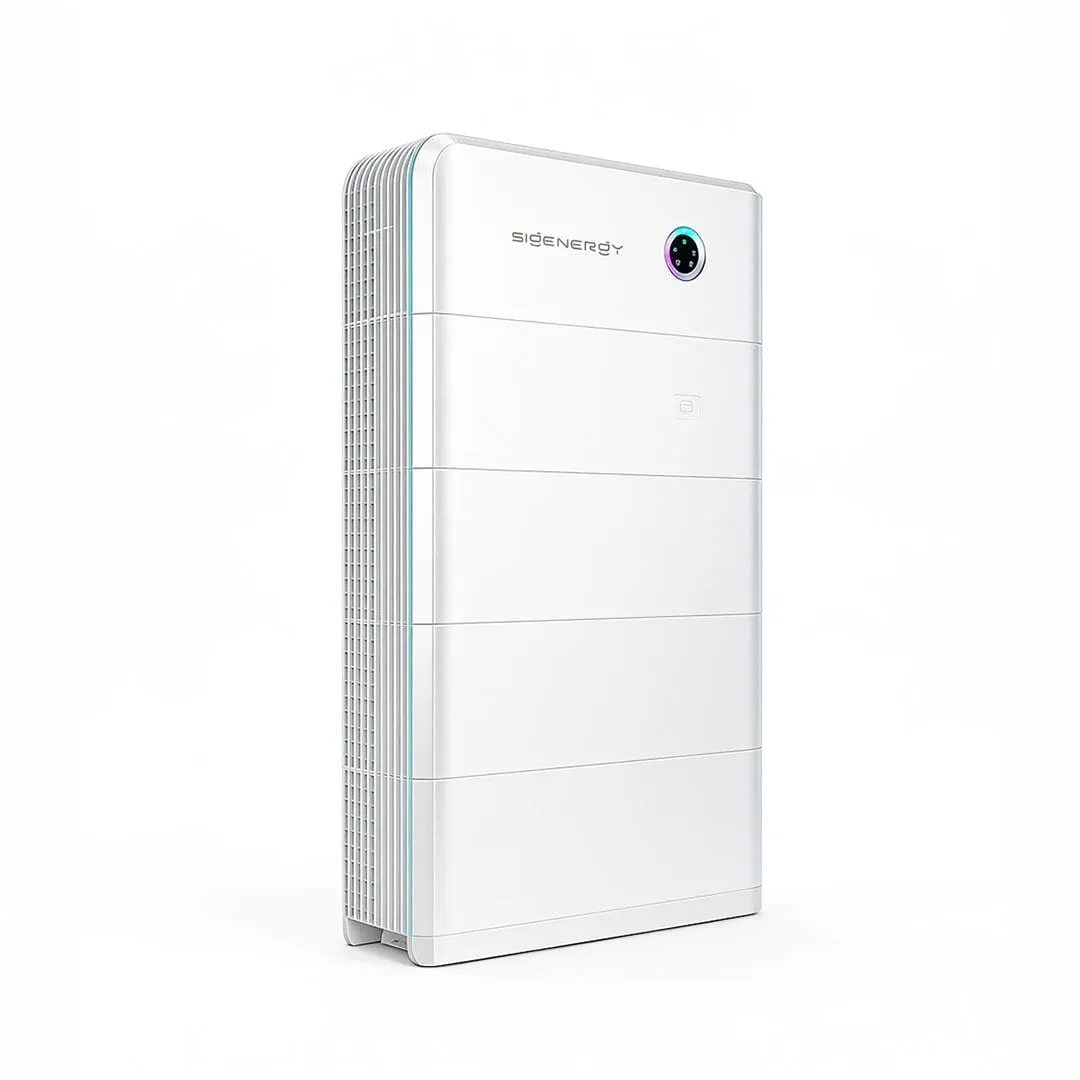
If you’ve had solar panels for a while, or you’re weighing them up now, the battery question always follows. Panels make electricity when the sun’s out, which in the UK is rarely when you actually need it. A battery lets you store the midday surplus and use it at 7pm when the kettle, the oven and the telly are all on. This guide covers how home batteries actually work, how to size one properly, what’s on the market, and — honestly — whether the sums stack up in 2026.
How a home solar battery actually works
A solar battery sits between your panels and your consumer unit. During the day, your panels generate more electricity than a typical home uses, especially outside of peak evening hours. Without a battery, that surplus either gets exported to the grid (paid at your Smart Export Guarantee rate) or, on an unmetered basic setup, is simply wasted. With a battery, the surplus charges the battery first, and only the excess beyond that spills over to export.
In the evening, instead of buying electricity back from the grid at your normal import rate — typically around 25p/kWh under the current Ofgem price cap, though tariffs vary — you draw down the stored charge. Most modern systems also let you charge the battery overnight from the grid on a cheap tariff (Economy 7-style or EV/smart tariffs), then use that stored power during the day if solar generation is low, effectively arbitraging the price difference between cheap night rates and expensive day rates even without much sun.
The core components are:
- The battery itself — usually lithium iron phosphate (LiFePO4) chemistry now, which is more thermally stable and longer-lived than older lithium-ion or lead-acid.
- A hybrid inverter or separate battery inverter — converts DC from panels and battery into AC for your home, and manages the charge/discharge logic.
- An energy management system — the “brain” that decides whether to charge from solar, charge from grid, discharge to the home, or export, usually controlled via an app.
Some systems are DC-coupled (battery sits on the same DC bus as the panels, slightly more efficient) and some are AC-coupled (battery has its own inverter, easier to retrofit to an existing solar array). If you already have panels and are adding a battery later — a very common scenario — AC-coupled retrofit kits are usually the simpler route, and it’s worth getting a proper survey from an installer rather than assuming a like-for-like fit; the team at Ecoaim in Livingston and ALPS Electrical both do retrofit battery assessments on existing solar arrays rather than just new-build combined installs.
Sizing a battery for your home
This is where most people either overspend or undersize. The right capacity depends on three things: your daily electricity usage, your panel size (and therefore your typical daily surplus), and how much of that surplus you actually want to shift to the evening.
As a rough guide:
| Household profile | Typical daily use | Sensible battery size | Notes |
|---|---|---|---|
| 1-2 people, small home, no EV | 6-9 kWh | 3-5 kWh | Often skip a battery or go small |
| Family of 3-4, average home | 10-14 kWh | 5-10 kWh | Sweet spot for most UK homes |
| Family with EV and/or heat pump | 15-25+ kWh | 10-13.5 kWh | Battery earns its keep fastest here |
| Home working, high daytime load | Varies | Smaller battery, bigger panel array | Less need to “time-shift” power |
A useful rule of thumb: a battery sized to roughly match one evening’s worth of “peak period” usage (typically 4pm-10pm) captures most of the achievable saving. Going bigger than that mostly helps on dull winter days when you want to bank grid electricity on a cheap overnight tariff, or if you’re chasing near-total energy independence rather than just cost saving — which, for most homes on the UK grid, is a lifestyle choice rather than a financial one, since a fully cloudy multi-day spell in December will still draw from the grid regardless of battery size.
If you’re unsure how much surplus your panels are actually generating versus using, look at your inverter app data for a few sunny days — the gap between generation and consumption during daylight hours is roughly what a battery could capture.
Battery brands worth knowing (2026)
The market has matured a lot since the early Powerwall/Powervault days. A few names come up repeatedly:
- Tesla Powerwall 3 (13.5 kWh) — now includes its own built-in solar inverter, simplifying installs where you’re doing panels and battery together. Installed pricing typically runs £8,500-£10,500. Popular, well-supported, but a single fixed size — no modular scaling.
- GivEnergy — a UK-based, MCS-friendly brand that’s become an installer favourite because of flexible AC- and DC-coupled options and modular stacking (add extra battery modules later).
- Growatt, Sofar, Solax — Chinese-manufactured but widely used across UK installer networks, generally competitive on price with solid warranty terms (commonly 10 years).
- Puredrive, Duracell Energy, Fox ESS — increasingly common in the mid-market segment.
Chemistry-wise, LiFePO4 is now close to universal in new installs because it doesn’t share the thermal-runaway risk profile of older NMC lithium cells, and it typically handles more charge cycles before degrading. Warranties on modern batteries are usually expressed as a cycle count (e.g. 6,000 cycles) alongside a 10-year term, and most manufacturers guarantee a minimum retained capacity — commonly 60-70% — at the end of that warranty period.
Whichever brand, MCS certification of the installation is essential — not just for any Smart Export Guarantee eligibility on the linked solar array, but because most competent installers, warranty registrations and future property sales checks expect it. If a battery quote doesn’t mention MCS, ask why.
What it actually costs, and whether it’s worth it
Installed battery costs in 2026 typically run £4,000-£8,000 for a household-scale system, or roughly £400-£700 per kWh of capacity once you strip out brand premiums. A Tesla Powerwall 3 sits at the top of that range because of the integrated inverter and installer demand.
Whether a battery pays for itself depends heavily on:
- Your existing solar array size — if you’re only generating 3-4 kWh a day of surplus, a 10 kWh battery will rarely fill, wasting capital.
- Your export rate versus import rate — the bigger the gap between what you’re paid to export (commonly 12-20p/kWh at the better end of the Smart Export Guarantee market, though this varies significantly by supplier and is not a fixed national rate) and what you pay to import (around 25p/kWh), the more a battery is worth versus simply exporting the surplus.
- Whether you’re on, or can move to, a time-of-use tariff — batteries earn their keep fastest on tariffs with a big day/night price differential, since you can charge cheaply overnight and avoid peak-rate import even on a dull solar day.
- Your evening usage pattern — EV charging, heat pumps and home working all increase the value of shifting stored daytime solar (or cheap overnight import) into daytime and evening use.
As a broad steer: retrofitting a battery to an existing well-sized solar array, on a household with meaningful evening/EV load, commonly pays back somewhere in the region of 6-10 years, with battery lifespan typically rated well beyond that (many warranties run to 10 years with useful life often extending further). Retrofitting a battery to a small array with modest evening usage is a much longer, sometimes uneconomic, payback — in that case it may be more sensible to simply export the surplus and revisit a battery later as prices continue to fall.
It’s also worth remembering: 0% VAT currently applies to residential battery storage installations in Great Britain until 31 March 2027 (after which it’s scheduled to revert to 5%), whether installed alongside new panels or retrofitted to an existing array — so if you’ve been sitting on the fence, the tax treatment is a genuine reason to not leave it too late, rather than a marketing line.
For a fuller breakdown of the maths, our sister site has a dedicated page on solar battery storage costs with more granular cost-per-kWh figures, and their solar panel payback period piece is a useful companion if you’re weighing up a combined panels-plus-battery install rather than a retrofit.
Getting a battery installed properly
A few practical points that separate a good install from a mediocre one:
- Get an MCS-certified installer and ask to see their DNO (Distribution Network Operator) notification process — larger battery/inverter combinations sometimes need DNO approval before connection, and a competent installer handles this as standard.
- Check the warranty covers the whole system, not just the battery cells — inverter warranties (typically 10-12 years) and installer workmanship warranties (commonly 2-10 years) matter just as much as the battery’s own cycle warranty.
- Ask where the battery will physically sit. Garages, utility rooms and outbuildings are common; some units are outdoor-rated, some aren’t, and ventilation/temperature range matters for both performance and longevity.
- Get a genuine consumption-and-generation-based sizing recommendation, not just “biggest battery you sell.” A good installer will ask about your usage pattern, EV plans and existing (or planned) panel size before quoting.
If you’re in South Yorkshire, ElectriFusion Solutions cover both the electrical and battery side of retrofits around Doncaster; in the Home Counties, Sola UK handle Hertfordshire installs; and further south, Solent Solar and South Coast Solar Solutions both cover Hampshire and the south coast respectively. If you’re further west, FLD Electrical serve Swansea and South Wales, and in the East Midlands, Greenlinc Renewables — sorry, Greenlinc Renewables — cover Lincolnshire. All are worth a no-obligation survey before you commit to a spec.
A final word on batteries versus just exporting
It’s easy to assume a battery is always the “next logical step” after panels, but it isn’t automatic. If your roof only supports a small array, your evenings are genuinely low-usage (say you’re out at work and back late), and your export rate is decent, you may get better value simply exporting the surplus and putting the capital elsewhere — or waiting a year or two as battery prices continue their gradual decline. Conversely, if you’ve got an EV, a heat pump, or a family that’s home and using power every evening, a correctly-sized battery is usually one of the more solid pieces of home energy kit you can buy right now, helped along by the 0% VAT window.
If you haven’t looked yet, our guide on whether solar panels actually work in the UK climate is a useful starting point before you get as far as batteries, and our best solar panels UK roundup covers the panel side of the equation if you’re planning a combined install rather than a retrofit.
Get two or three independent quotes, ask each installer to size against your actual usage data rather than a generic package, and don’t let anyone sell you a battery bigger than your solar array and your evenings actually need.